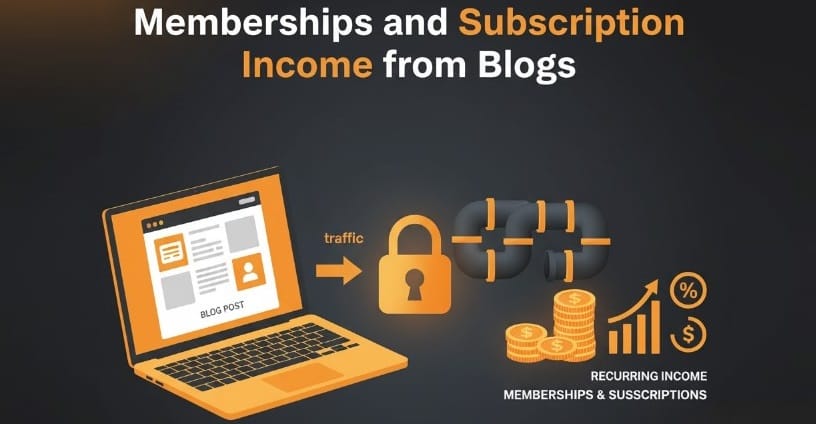
Introduction
Most bloggers dream of earning consistent monthly income rather than chasing one-time sales or ad clicks. The secret? Memberships and subscriptions.
By turning your blog into a members-only platform, you create predictable revenue while deepening the relationship with your audience.
Unlike affiliate marketing or ad networks that fluctuate, membership income is stable, scalable, and community-driven.
Let’s explore how to design, launch, and grow a profitable membership model directly from your blog.
1. Why Memberships Are the Future of Blogging
Blog audiences crave more than free posts — they seek exclusive insights, tools, or mentorship from creators they trust.
A membership program transforms your blog from a content source into a value-driven ecosystem where readers become paying supporters.
Main benefits:
- Recurring revenue: predictable monthly or yearly income.
- Stronger community: deeper engagement and loyalty.
- Content freedom: less dependence on ads or algorithms.
- Higher perceived authority: members view you as an expert, not just a blogger.
💡 Stat: Subscription-based business models grow nearly 5x faster than traditional online sales.
2. Understanding the Membership Model
A blog membership is a paid access system where readers pay regularly for premium content, resources, or community interaction.
Common models include:
- Content Membership: Access to premium articles, tutorials, or reports.
- Community Membership: Exclusive forums, masterminds, or Q&A sessions.
- Hybrid Model: Combines exclusive content with live interaction and perks.
- Tiered System: Offers multiple membership levels (e.g., Silver, Gold, Platinum) with increasing value.
Each model depends on your niche, audience size, and the type of transformation you deliver.
3. What to Offer Inside Your Membership
The key to a successful membership is consistent value delivery. Here are content ideas that convert:
- In-depth tutorials or video lessons
- Downloadable resources (templates, checklists, toolkits)
- Monthly Q&A sessions or webinars
- Private community or Discord group
- Early access to new blog posts or products
- Discounts on coaching or affiliate tools
🎯 Tip: Start with one high-value deliverable (like monthly exclusive guides) and expand as your membership grows.
4. How to Set Up a Membership on Your Blog
Creating a membership system on WordPress is easier than ever.
Here’s how:
Step 1: Choose a Membership Plugin
Top tools include:
| Plugin | Best For | Notes |
|---|---|---|
| MemberPress | All-in-one solution | Powerful, integrates with payment gateways |
| Paid Memberships Pro | Flexible tiers | Open-source with strong support |
| Substack (external) | Newsletter-based memberships | Great for writers and journalists |
| Patreon | Creators and podcasters | Easiest to start, but higher fees |
| Ghost CMS | All-in-one blog + membership system | SEO-friendly, great for simplicity |
Step 2: Set Up Payments
Use Stripe, PayPal, or WooCommerce Subscriptions for automatic renewals.
Offer both monthly and annual plans — many users prefer yearly discounts.
Step 3: Protect Your Content
Use your membership plugin to restrict premium posts, videos, or downloads.
Create clear labels like “Members-only article” to encourage free users to upgrade.
5. Pricing Strategies That Work
Finding the right price depends on your niche, content frequency, and value.
General benchmarks:
- Entry-level: $5–$15/month — for exclusive blog posts or early access.
- Mid-tier: $25–$50/month — for tutorials, private community, or digital tools.
- Premium: $100+/month — for coaching, mentorship, or advanced training.
💡 Pro Tip: Launch at a founding-member discount to attract your first 20–50 paying members and gather testimonials.
6. Marketing Your Membership Program
Even great memberships fail without effective marketing.
Use these proven tactics to promote your offer:
a. Blog-based Promotion
- Add CTAs within blog posts: “Read the full guide in our Members Section.”
- Create SEO-optimized landing pages that highlight benefits and testimonials.
- Offer a free preview or mini-membership.
b. Email Marketing
- Send drip campaigns introducing your membership benefits.
- Offer exclusive discounts to subscribers.
- Share behind-the-scenes content to build curiosity.
c. Social Media & Community
- Announce new content drops regularly.
- Share member success stories or results.
- Go live occasionally for free Q&A sessions, teasing premium content.
d. Content Upgrades
Offer free resources (e.g., a free checklist) in exchange for email sign-ups — then upsell your membership through automation.
7. Maintaining Member Retention
The real profit in subscriptions comes from long-term retention.
Keeping members engaged requires consistent updates and connection.
Retention tactics:
- Release new content on a fixed schedule.
- Regularly ask for feedback and act on it.
- Offer loyalty rewards or referral bonuses.
- Send weekly newsletters to keep members active.
- Foster community interaction — people stay for relationships, not just content.
🧠 Remember: It’s 5× cheaper to retain a member than to find a new one.
8. Scaling and Automating Your Membership Business
Once you establish a steady flow of members, you can scale through:
- Affiliate programs: Let satisfied members promote your program.
- Bundles: Combine membership with ebooks, online courses, or templates.
- Evergreen funnels: Use automated email sequences to drive ongoing sign-ups.
- Partnerships: Collaborate with influencers or bloggers in your niche.
Automation frees you from day-to-day marketing, allowing you to focus on community building and content quality.
9. Common Mistakes to Avoid
Avoid these traps that slow growth:
- Offering too much too soon (start simple)
- Ignoring feedback or member engagement
- Underpricing premium content
- Neglecting onboarding — welcome new members properly
- Failing to show consistent progress or new updates
A membership business thrives on trust and predictability, not perfection.
10. Final Thoughts
Creating a membership or subscription income stream from your blog is one of the smartest moves for long-term sustainability.
It transforms your readers into paying supporters, provides you with predictable income, and helps you build a loyal, engaged community that grows with your brand.
You don’t need a massive audience — just consistent value and a system that rewards loyalty.
Start small, serve deeply, and scale sustainably.
The future of blogging isn’t about page views — it’s about belonging.