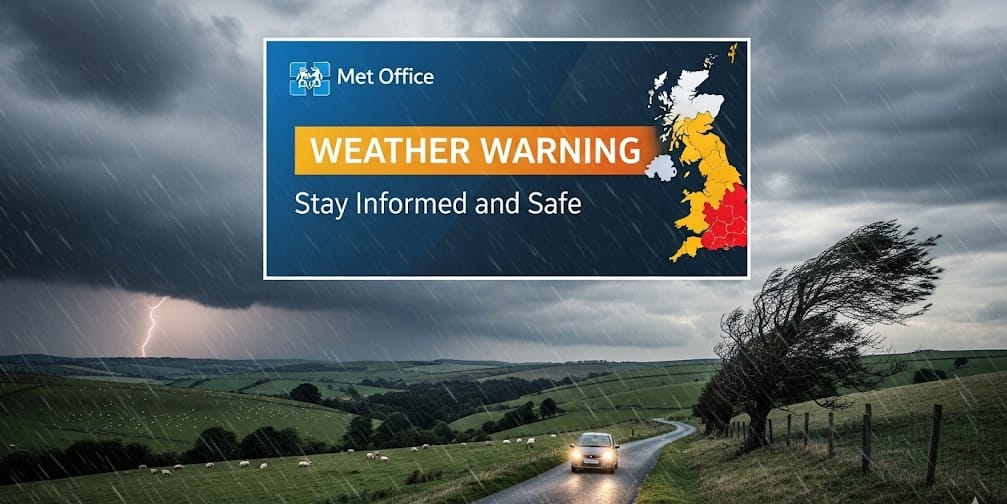
🌧️ Met Office Weather Warnings in the UK: Stay Informed and Safe
🏛️ Introduction
The UK is no stranger to unpredictable weather, from sudden storms to heatwaves and winter snowfalls. The Met Office, the United Kingdom’s national weather service, plays a crucial role in keeping citizens safe through weather warnings and alerts.
These warnings inform the public about potentially dangerous weather, allowing individuals, businesses, and emergency services to prepare in advance. Understanding how these warnings work and what actions to take can make a critical difference.
📌 How the Met Office Issues Weather Warnings
The Met Office uses a color-coded warning system to indicate the severity and likelihood of weather events:
- Yellow (Be Aware): Low to moderate impact. Be aware of changing conditions.
- Amber (Be Prepared): Moderate to high impact. Prepare for disruptions such as travel delays, power cuts, or flooding.
- Red (Take Action): Severe weather with significant impact. Immediate action required to protect life and property.
⚡ Types of Weather Covered
- Storms and High Winds 🌬️
- Heavy Rain and Flooding 🌊
- Snow and Ice ❄️
- Heatwaves ☀️
- Fog 🌫️
The warnings are updated frequently as conditions change, with alerts disseminated via mobile apps, social media, radio, and official websites.
🛡️ Why Weather Warnings Matter
- Protecting Lives: Early warnings help people avoid dangerous situations, such as driving in icy conditions or traveling during severe storms.
- Minimizing Property Damage: Alerts enable residents and businesses to secure homes, equipment, and stock before extreme weather hits.
- Emergency Planning: Local authorities and emergency services rely on warnings to mobilize resources, open shelters, and manage evacuation if needed.
- Travel Safety: Airlines, railways, and road networks adjust services to reduce accidents and delays during severe weather.
📊 Recent Weather Warnings in the UK
- Winter Storms: In December 2024, amber warnings for snow and ice affected large parts of Scotland and Northern England, causing travel disruption and school closures.
- Heatwave Alerts: Summer 2025 saw red warnings issued for southern England, prompting advice to stay hydrated and avoid outdoor exertion during peak hours.
- Flood Alerts: Heavy rain in February 2025 triggered yellow and amber warnings for rivers and coastal areas across Wales and the Midlands.
These examples highlight the importance of timely alerts for both personal safety and operational planning.
💡 How to Respond to Weather Warnings
- Yellow Warning: Stay informed. Check local news, weather apps, and plan minor adjustments to travel or outdoor activities.
- Amber Warning: Prepare your home and workplace. Check emergency kits, ensure vehicles are ready, and adjust travel plans.
- Red Warning: Take immediate action. Follow instructions from local authorities, avoid travel unless essential, and help vulnerable neighbors if safe to do so.
🌍 Technology and Innovation
The Met Office uses advanced tools to improve accuracy:
- Supercomputer Models: Simulate weather patterns to predict storms, floods, and heatwaves.
- Satellite Imagery: Real-time monitoring of cloud systems, rainfall, and temperature changes.
- AI and Data Analytics: Machine learning algorithms improve forecast precision and help issue warnings earlier.
These technologies ensure that warnings are as accurate and timely as possible, reducing risks and improving public response.
✅ Key Takeaways
- Always pay attention to warnings. Ignoring alerts can have serious consequences.
- Plan ahead. Keep emergency kits, secure property, and adjust travel during severe weather.
- Stay informed. Use the Met Office website, apps, and official social media channels.
- Educate others. Share updates with family, friends, and neighbors to keep everyone safe.