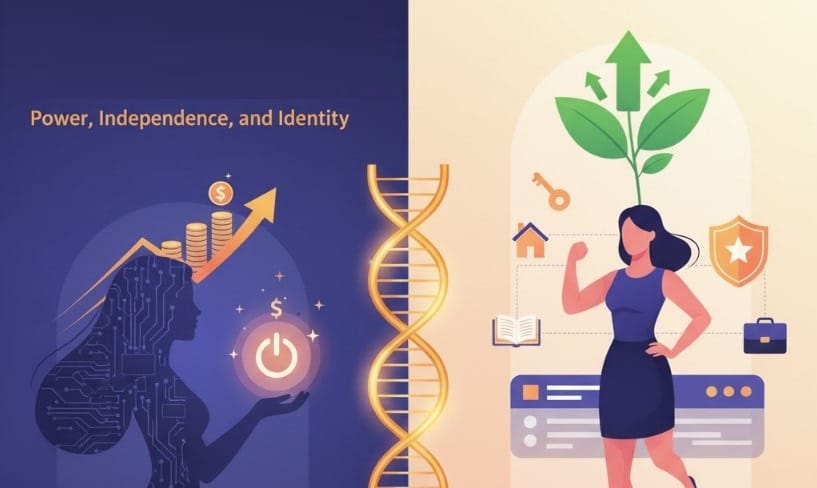
Introduction
For centuries, money has been intertwined with power — and power with masculinity.
But as women continue to redefine success, leadership, and independence, a new question arises:
What does money mean in the context of femininity?
Money is more than currency — it’s a mirror reflecting our beliefs about worth, freedom, and identity.
For women, navigating this relationship often involves unlearning cultural scripts that have tied femininity to dependence or self-sacrifice.
This article explores how money and femininity intersect, why empowerment begins with financial literacy, and how redefining wealth can lead to true independence — both personal and collective.
💎 1. The Historical Relationship Between Money and Femininity
For much of history, women were excluded from financial autonomy.
Property laws, unequal pay, and societal norms positioned men as “providers” and women as “dependents.”
Even today, these narratives echo in subtle ways — through guilt about ambition, discomfort discussing money, or the internalized belief that wanting wealth is “unfeminine.”
The result? Many women grow up associating money with security rather than freedom — focusing on managing it, not mastering it.
Yet as social and economic structures evolve, women are reclaiming money as a source of agency, not dependency.
🌿 2. The Emotional Landscape of Money for Women
Money carries emotional weight — and for women, that weight often includes:
- Guilt for wanting more
- Fear of being judged as materialistic or “too ambitious”
- Shame around financial mistakes or debt
- Pressure to be both independent and nurturing
These emotions can create internal conflict:
“I want financial independence, but I don’t want to seem greedy.”
This double standard keeps many women undercharging for their work, avoiding negotiations, or deferring financial decisions to others.
Breaking this cycle starts with reframing money as neutral energy — a tool that amplifies your values, not diminishes your femininity.
💪 3. Money as a Form of Power — and Self-Definition
Money grants options — to choose where to live, how to work, and whom to depend on.
That autonomy directly influences a woman’s sense of identity and power.
When women earn, invest, and manage their finances confidently, they redefine what power looks like — moving from dependence to self-determination.
💬 Aspects of Financial Power:
- Freedom: The ability to make choices without fear.
- Security: The confidence that comes from stability.
- Influence: The power to contribute, support, and lead.
Money doesn’t make women powerful — it amplifies the power they already have.
🧭 4. The Feminine Approach to Wealth
Traditional finance is often described in masculine terms — aggression, dominance, control.
But many women are drawn to a more holistic and values-driven approach.
The feminine perspective on money tends to emphasize:
- Collaboration over competition
- Purpose over accumulation
- Security and impact over status
This shift is reshaping not just how women manage money — but how society defines success itself.
Money becomes a medium of expression — a way to align your resources with your identity, passions, and values.
🌺 5. The Role of Self-Worth and Identity
A woman’s relationship with money often mirrors her relationship with self-worth.
If you believe you are not deserving of wealth, opportunities, or abundance, your financial life reflects that belief.
Healing your financial identity begins with understanding that:
Earning money doesn’t make you less feminine — it expands your freedom to express it.
Building wealth is not about greed or ego. It’s about honoring your potential and creating stability that allows your authentic self to flourish.
(👉 Internal link idea: Connect to your article “Financial Shame: What It Is and How to Heal.”)
💞 6. The Balance of Independence and Connection
One of the most beautiful aspects of feminine energy is connection — to people, purpose, and community.
Financial independence doesn’t mean isolation; it means participating in those connections from a place of choice, not obligation.
When women thrive financially, they often reinvest in their families, communities, and causes.
This collective prosperity transforms financial independence into shared empowerment.
🔑 7. Practical Ways to Build Financial Confidence
Financial empowerment isn’t abstract — it’s learned through consistent, intentional steps.
Steps to Start:
- Educate Yourself — Learn the basics of saving, investing, and debt management.
- Track and Celebrate Progress — Every small win builds confidence.
- Talk About Money Openly — Normalize the conversation among friends and peers.
- Align Money with Values — Spend and invest in ways that reflect who you are.
- Seek Mentorship — Surround yourself with financially empowered women.
(👉 Internal link idea: link to “Best AI Tools for Finance & Productivity.”)
Financial confidence grows not from having more money but from having more understanding and control.
🌼 8. Redefining Femininity in the Age of Financial Freedom
Modern femininity is multifaceted — strong and soft, logical and intuitive, ambitious and nurturing.
Money, when embraced consciously, enhances that wholeness.
You can be compassionate and wealthy.
You can lead and remain empathetic.
You can love beauty, connection, and still seek financial mastery.
Feminine financial power is not about mimicking masculine success — it’s about redefining success on your own terms.
🌟 Conclusion: Money as a Mirror of Self-Respect
The relationship between money and femininity is ultimately about self-respect.
Every financial decision — from asking for a raise to starting a business — becomes an act of self-trust.
When women claim their financial voice, they don’t just change their own lives — they shift the narrative for generations.
Money is not the opposite of femininity.
It’s an extension of it — a reflection of power, purpose, and the freedom to create life on your own terms.