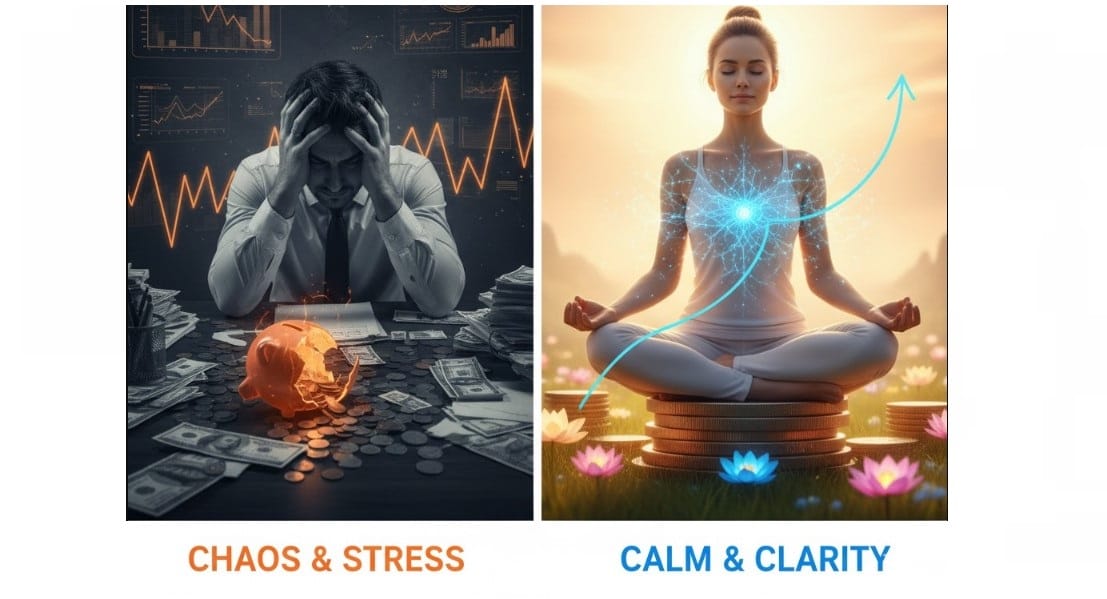
Money is one of life’s greatest stressors. Uncertainty, debt, or overspending can trigger anxiety, overwhelm, and emotional burnout. Mindfulness—the practice of present-moment awareness without judgment—offers a powerful tool to regain calm and clarity in financial life.
By integrating mindfulness into money management, you can reduce stress, make intentional decisions, and cultivate a healthier financial mindset.
1. The Connection Between Money and Stress
Financial concerns activate the body’s stress response, releasing cortisol and adrenaline. Chronic money stress can lead to:
- Anxiety and worry
- Sleep disturbances
- Emotional overspending or hoarding
- Avoidance of budgeting or financial planning
- Relationship strain over money
Mindfulness helps regulate the nervous system, improve emotional resilience, and prevent reactive financial behavior.
2. How Mindfulness Enhances Financial Decision-Making
Mindfulness encourages:
- Awareness of Triggers: Identifying emotional responses to spending, saving, or investing
- Non-Judgmental Observation: Recognizing patterns without shame or guilt
- Intentional Action: Making choices aligned with values, not impulses
- Stress Reduction: Calming the mind to improve clarity and rational decision-making
By applying these principles, financial decisions become more deliberate and aligned with long-term goals.
3. Practical Mindfulness Techniques for Money
A. Mindful Budgeting
Track income and expenses without judgment. Focus on understanding habits rather than labeling them as “good” or “bad.”
B. Pause Before Spending
Before purchases, ask: “Do I truly need this? Does it align with my values?” This reduces impulsive decisions.
C. Emotional Check-Ins
Notice feelings of anxiety, guilt, or fear around money. Name emotions without reacting to them.
D. Gratitude Practice
Acknowledge the financial resources you already have. Gratitude reduces scarcity thinking and comparison-driven stress.
E. Breathing and Grounding Exercises
Simple techniques like deep breathing or body scans can calm the nervous system during financial stress.
F. Reflective Journaling
Document financial goals, experiences, and emotional responses to track growth and patterns over time.
4. Benefits of Mindful Money Practices
Integrating mindfulness into finances offers emotional, psychological, and practical advantages:
- Reduced Stress: Calm your mind during budgeting, bill payments, or debt management
- Better Spending Habits: Make conscious decisions that align with values
- Improved Emotional Regulation: Prevent reactive or fear-driven financial behaviors
- Clarity and Focus: Identify priorities and long-term goals
- Enhanced Financial Confidence: Empower yourself through awareness and intentionality
Mindfulness transforms money from a source of chaos into a tool for intentional living and personal growth.
5. Overcoming Challenges
Challenges in applying mindfulness to finances may include:
- Emotional Resistance: Fear or guilt about past financial mistakes
- Habitual Patterns: Impulsive spending habits require consistent practice to change
- External Pressures: Societal or peer-driven expectations may conflict with mindful decisions
Solutions: Start small, practice consistently, and focus on progress rather than perfection. Over time, mindfulness becomes a natural component of financial well-being.
6. Long-Term Impact
Mindful money management helps create:
- Sustainable financial habits
- Reduced anxiety and financial burnout
- Greater alignment between spending and personal values
- Stronger resilience during financial challenges
- Emotional empowerment in all areas of life
The ultimate goal is financial peace, where money supports your life rather than controls it.
Conclusion
Money doesn’t have to be a source of stress and chaos. By cultivating mindfulness, you can regain emotional control, make intentional choices, and foster financial well-being.
Financial mindfulness transforms your relationship with money from reactive and stressful to aware, intentional, and empowering—bringing calm to the chaos of modern life.