Introduction: A Nation Torn Between Image and Reality
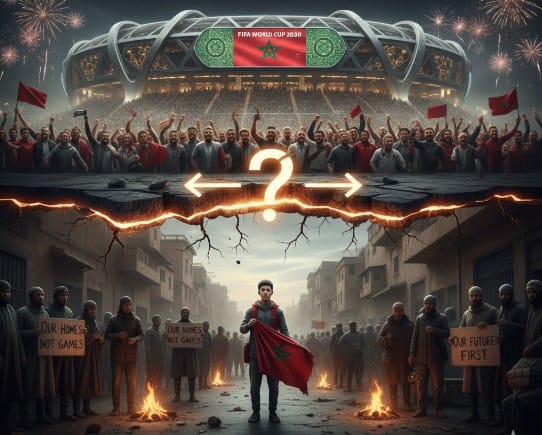
In 2025, Morocco stands at a crossroads. On one side, the kingdom prepares to welcome the world in 2030 as co-host of the FIFA World Cup. On the other, millions of its citizens struggle with unemployment, poverty, failing healthcare, and underfunded schools.
The central question now resonates from cafes in Casablanca to university halls in Rabat: will Morocco finally prioritize the well-being of its own people—or will it continue to focus on dazzling its international guests?
Billions for Stadiums, Pennies for Services
The Moroccan government has pledged billions of dollars for stadium renovations, high-speed rail links, and luxury hotels. Officials present these projects as investments in modernization and national pride.
Yet everyday realities tell a different story:
- Hospitals running out of basic supplies.
- Overcrowded classrooms with underpaid teachers.
- Youth unemployment near 37%, one of the highest in the region.
- Families crushed under inflation as food and rent prices rise.
For ordinary Moroccans, the glittering stadiums symbolize not pride, but misplaced priorities.
The People vs. the Prestige Project
Protests across Morocco—led by a digitally savvy Gen Z—reflect growing anger at this imbalance. Demonstrators chant slogans such as “We don’t need stadiums, we need hospitals.” Social media posts contrast FIFA blueprints with footage of poverty-stricken neighborhoods.
This tension reveals a deeper truth: mega-events often benefit political elites, global corporations, and wealthy investors, while the majority of citizens remain excluded from the promised “prosperity.”
The Risk of International Backlash
FIFA and the international press are watching closely. Morocco’s rulers hope the World Cup will project stability and progress. But if domestic unrest grows, the image may flip: the world could see Morocco as a nation prioritizing spectacle over dignity.
Similar controversies have already hit previous hosts such as Brazil, South Africa, and Qatar, where the gap between mega-projects and social justice sparked global criticism.
A Chance to Choose Differently
Despite the bleak outlook, Morocco still has an opportunity. By redirecting part of its World Cup budget to essential services, increasing transparency in spending, and involving young voices in decision-making, the government could transform the event into a true legacy project.
Instead of stadiums that become empty shells, Morocco could create hospitals, schools, and job programs that serve long after the final whistle.
Conclusion: The True Test of 2030
The World Cup is more than a football tournament; it is a mirror reflecting a nation’s values. Morocco must decide what story it wants to tell in 2030.
Will it be remembered as the kingdom that dazzled the world while abandoning its people? Or as the nation that turned a global spotlight into a chance to uplift its citizens?
The world is watching. And so are Morocco’s sons and daughters, demanding to be seen, heard, and prioritized.
🔑 Key Question for Readers
Do you believe Morocco can transform the World Cup into a project that truly serves its people—or will it remain another spectacle for the elites?
Also :
Morocco’s Crisis and the World Cup Question: Could Turmoil Cost the Kingdom 2030?
Morocco’s Generation Z Revolt: Unmasking a Nation in Crisis
Stadiums or Survival? Morocco’s Costly World Cup Gamble on the Backs of Its People