Introduction
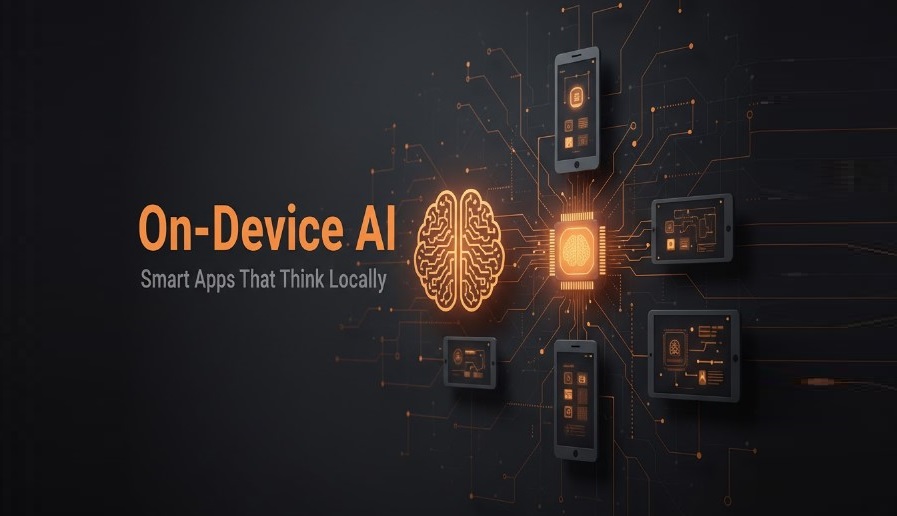
The world of artificial intelligence is evolving — and it’s shrinking in scale. Instead of relying entirely on cloud-based servers, on-device AI is bringing powerful machine learning models directly to smartphones, tablets, and laptops. This shift is changing how we interact with technology by making apps faster, more private, and more reliable — even offline.
What Is On-Device AI?
On-device AI (also known as edge AI) refers to running machine learning models locally on a device, rather than sending data to a remote server for processing.
This technology uses optimized neural networks and lightweight AI models that can function without continuous internet access.
Popular examples include:
- Google’s Pixel AI features (like real-time voice transcription and photo editing)
- Apple’s Siri on-device processing for faster and more secure commands
- Snapchat filters and AR effects powered by local AI
Key Benefits of On-Device AI
🚀 1. Speed and Responsiveness
Processing data locally eliminates network latency, allowing apps to respond instantly. Tasks like image recognition or voice translation can now happen in real time.
🔒 2. Privacy and Data Security
Since data doesn’t need to be uploaded to the cloud, personal information stays on the device. This enhances user trust — a critical factor for apps in healthcare, finance, and communication.
🌐 3. Offline Functionality
With local AI models, users can enjoy smart features without an internet connection. This is especially useful for travelers, field workers, or regions with unstable connectivity.
⚡ 4. Energy Efficiency and Cost Reduction
Modern AI chips (like Apple’s Neural Engine or Qualcomm’s Hexagon DSP) are designed for low-power inference, reducing battery drain while keeping performance high.
Use Cases in Real Life
- Voice Assistants that respond instantly without sending audio to the cloud
- Photo Editing Apps that use AI to enhance images locally
- Language Translators that work offline
- Health and Fitness Trackers using sensors and AI for real-time insights
Challenges of On-Device AI
While promising, on-device AI still faces limitations:
- Storage constraints for large models
- Hardware compatibility across devices
- Regular updates to maintain accuracy
However, innovations in model compression and federated learning are overcoming these challenges quickly.
The Future of Smart, Local AI
As AI chips become standard in consumer devices, we’re heading toward a world where apps think locally first. This decentralized intelligence offers the best of both worlds — speed and privacy — setting a new standard for mobile technology.
✅ Conclusion
On-device AI represents a major leap forward for app developers and users alike. By processing data locally, apps become smarter, faster, and safer, creating a more seamless and private digital experience. As this technology continues to advance, it will redefine how we use — and trust — artificial intelligence in our daily lives.