💡 Introduction
In 2025, a major shift is happening in the world of mobile apps — AI is moving from the cloud to your device.
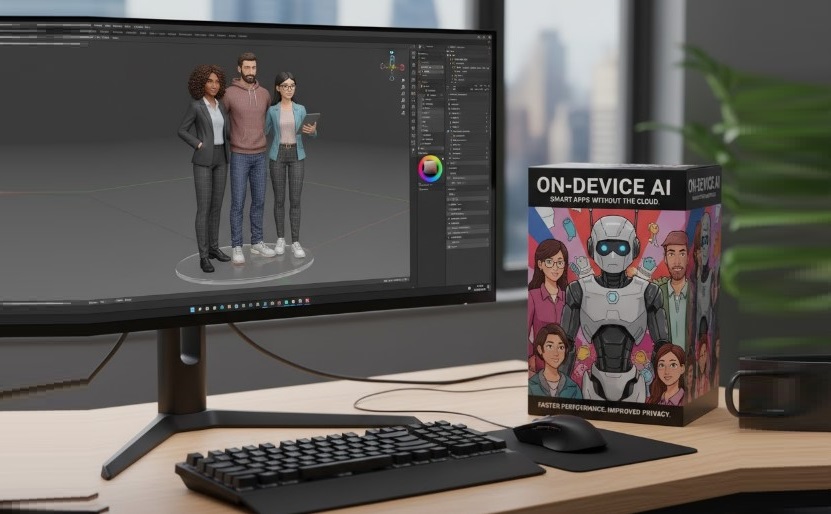
This evolution, known as On-Device AI, is redefining how apps process data, deliver results, and protect user privacy.
Instead of sending every request to remote servers, apps now use the processing power of modern smartphones to run artificial intelligence models locally — right where the user is.
⚙️ What Is On-Device AI?
On-Device AI means artificial intelligence models that run directly on your phone, tablet, or laptop, without constant internet or cloud connection.
This approach became practical thanks to advances in mobile chips like Apple’s Neural Engine, Google’s Tensor G3, and Qualcomm’s Snapdragon AI Engine — all designed to handle machine learning (ML) tasks efficiently on the device itself.
🔍 Examples:
- 📱 Apple Photos recognizing faces or pets without sending images to iCloud.
- 🗣️ Google Pixel performing live speech transcription offline.
- 🎧 Samsung Galaxy AI translating calls in real time — no server needed.
⚡ Benefits of On-Device AI
1. Speed and Low Latency
Because data no longer travels to distant servers, responses are almost instant.
This is crucial for apps that need real-time decisions, like camera filters, gaming assistants, and translation tools.
2. Enhanced Privacy
User data stays on the device, reducing risks of leaks or misuse.
This makes on-device AI especially appealing for health, finance, and messaging apps.
3. Offline Functionality
AI features like voice commands, image recognition, or text translation can now work without an internet connection — a huge advantage in remote areas.
🧠 Real-World Use Cases in 2025
- ChatGPT Mobile App (2025 update): now supports on-device reasoning for faster responses without sending full queries to the cloud.
- Google Gemini Nano (Android 15): runs small generative models directly on the phone.
- Snapchat & TikTok filters: use on-device AI for real-time visual effects.
- Replika AI: processes emotional tone detection locally to protect private conversations.
📖 Source: Google I/O 2024 – Gemini Nano announcement
📖 Source: Apple Machine Learning – Core ML
🔋 Challenges Ahead
Despite its promise, on-device AI faces several hurdles:
- Limited storage and processing power for large AI models
- Energy consumption on older devices
- Frequent model updates needed for accuracy
Tech giants are now working on hybrid AI systems — part local, part cloud-based — for the best of both worlds.
🌍 The Future of On-Device AI
By 2026, experts predict that over 60% of AI-powered apps will include on-device processing.
This will enable faster, more secure, and personalized digital experiences — marking the end of total dependence on cloud AI.
“The next generation of AI won’t live in data centers — it’ll live in your pocket.”