Introduction
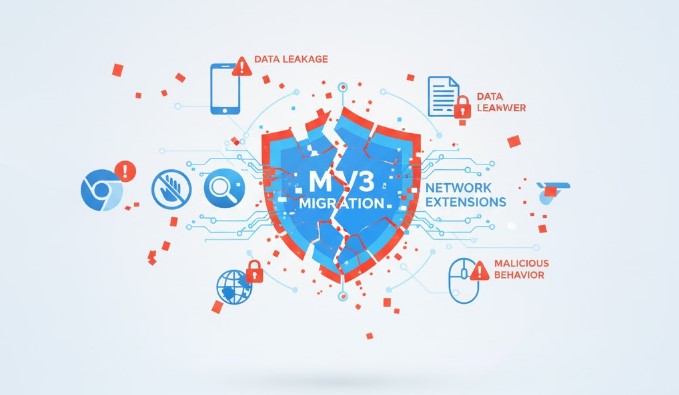
Browser extensions were once seen as harmless productivity tools — tiny add-ons designed to enhance the web experience. But recent investigations show a darker side: an increasing number of extensions are being flagged for data collection, malicious code injection, and supply-chain manipulation.
The problem is no longer limited to obscure plugins — even popular extensions with millions of installs have been found leaking sensitive user data or integrating compromised third-party code.
🧠 Understanding the Supply-Chain Risk
Modern extensions often rely on external libraries, analytics SDKs, or third-party APIs. While this can accelerate development, it also opens the door to hidden vulnerabilities.
In several high-profile cases, attackers didn’t need to hack the extension directly — they compromised a third-party dependency, silently injecting tracking or malware code.
This form of supply-chain attack mirrors what has already affected major software ecosystems like NPM and PyPI. But on the browser level, it’s even more dangerous — because it touches your personal data, browsing habits, and authentication cookies.
🕵️♂️ Data Leakage Is on the Rise
Recent audits by security researchers and browser vendors have revealed alarming trends:
- Extensions selling anonymized user data to ad networks or analytics firms.
- Malicious updates pushed after developers sell their projects to unverified buyers.
- Code obfuscation used to hide tracking scripts or cryptocurrency miners.
Even extensions that claim to protect privacy, such as “VPN” or “ad-blocker” tools, have been caught collecting browsing data under vague privacy policies.
🔍 In 2025 alone, over 300 extensions were removed from Chrome Web Store and Edge Add-ons for violating user data policies.
🧩 Browser Vendors Step Up
To counter these growing threats, major browsers are tightening their review and security processes:
- Google Chrome now requires more detailed manifest transparency under Manifest V3.
- Mozilla Firefox has expanded its automated code scanning and manual review systems.
- Microsoft Edge introduced new trust labels for verified developers.
These measures help, but they also expose how fragile the current ecosystem can be when millions of users depend on unverified third-party code.
🔒 What Users Can Do to Stay Safe
While browser vendors enhance their safeguards, users also play a key role in protecting their privacy.
Here’s how to minimize your exposure:
- Install only from verified sources (Chrome Web Store, Mozilla Add-ons, Edge Add-ons).
- Check extension permissions — avoid those requesting access to all sites unless necessary.
- Review developer profiles and user ratings regularly.
- Avoid “free VPN” or “coupon” extensions that ask for broad permissions.
- Update your extensions frequently or remove inactive ones.
🧠 If an extension offers “too much value” for free, the real product may be your data.
🌐 For Developers: Building Trust Through Transparency
Developers can also strengthen user trust by adopting privacy-by-design principles:
- Minimize data collection and document all API calls.
- Sign and verify all third-party dependencies.
- Disclose ownership changes publicly.
- Use browser-native storage APIs rather than remote databases.
Transparent and minimalistic extensions are not only safer — they’re also favored by browser stores under new compliance guidelines.
🔮 The Road Ahead
The supply-chain problem won’t disappear overnight. As extensions become more powerful and AI integration deepens, attackers will find new vectors to exploit.
The next generation of browser ecosystems must evolve around zero-trust principles, runtime scanning, and AI-driven anomaly detection — identifying threats before users even install a harmful extension.
The message is clear: privacy is no longer just a feature — it’s a responsibility shared by everyone in the ecosystem.
💬 Conclusion
The browser extension landscape is shifting from convenience to caution. With Manifest V3, enhanced reviews, and user awareness, the web is slowly becoming safer — but vigilance remains crucial.
In this new age of digital risk, the real defense isn’t just technology; it’s transparency, verification, and trust.