Introduction
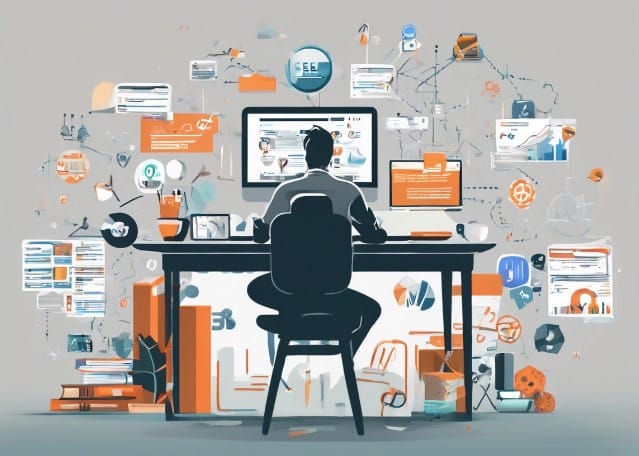
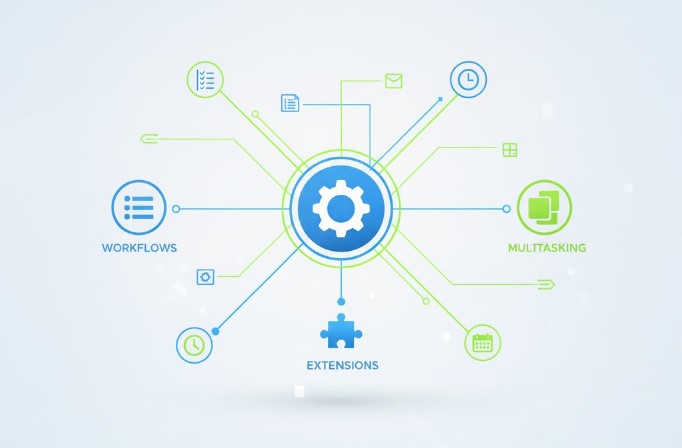
The modern browser is no longer just a gateway to the web — it’s becoming a productivity hub. As AI and automation reshape daily work, browser extensions are transforming into lightweight orchestration tools that manage workflows, coordinate apps, and optimize multitasking directly within the browsing environment.
This shift marks the rise of “productivity layers” — extensions that sit between users and the web, intelligently connecting everything from project management to communication tools.
⚙️ From Utility Add-ons to Workflow Engines
In their early days, extensions were designed to perform single, isolated tasks — blocking ads, capturing screenshots, or saving passwords.
Today’s new generation of extensions takes a very different approach. They act as workflow orchestrators, integrating multiple services and tools together.
Examples include:
- Tango & Scribe: Automatically document processes as you perform them.
- Notion Web Clipper & ClickUp Assistant: Seamlessly capture ideas and manage tasks.
- Zapier & Bardeen: Automate repetitive browser actions and connect cloud apps.
These extensions don’t just simplify work — they redefine productivity by removing context-switching and streamlining multitasking.
🧠 The Concept of “Productivity Layers”
A productivity layer is an intelligent system that runs across your daily digital workflows — not replacing your tools, but connecting and coordinating them.
In browsers, this layer manifests as a set of lightweight extensions that understand context, trigger automations, and provide insights right where you work.
🪄 Imagine drafting an email, while an extension automatically pulls meeting notes from Notion and attaches relevant files from Google Drive — all without leaving your tab.
This isn’t science fiction; it’s the next phase of browser productivity.
💼 Multitasking Made Seamless
With productivity-layer extensions, the browser becomes your operating system for work.
These tools enable:
- Task orchestration: Launch or complete tasks across platforms (e.g., Trello → Gmail → Slack).
- Smart reminders: Detect deadlines and create context-based alerts.
- Cross-app insights: Combine data from multiple tabs or services.
- One-click automations: Trigger workflows from toolbars or shortcuts.
Instead of juggling apps and tabs, users can delegate tasks to the browser — achieving real-time efficiency.
🔄 Integration with AI and Cloud Ecosystems
The rise of AI assistants and cloud-based tools is fueling this transformation.
AI now helps extensions:
- Understand user intent in real-time.
- Recommend next actions or automations.
- Manage background tasks (like summarizing, responding, or tagging).
This synergy between AI and browser extensions creates a unified digital workspace, where productivity flows naturally instead of being fragmented across apps.
🧩 The Developer Perspective
For developers, this trend opens a new frontier: extensions as orchestration nodes rather than isolated scripts.
Modern frameworks such as WXT, Plasmo, and Manifest V3 APIs allow developers to:
- Integrate multiple APIs seamlessly.
- Create cross-browser automations.
- Leverage service workers for background coordination.
This modular, event-driven approach makes extensions lighter, faster, and more powerful — ideal for next-gen productivity tools.
🌐 Future Outlook: The Browser as a Workspace
As the boundaries between apps and browsers continue to blur, expect to see:
- Unified dashboards inside browsers, powered by AI-driven extensions.
- Context-aware multitasking, with real-time task orchestration.
- Collaborative extensions, integrating communication and project management.
The browser will soon act as the command center of digital work, where lightweight extensions form the productivity backbone.
💬 Conclusion
Extensions are no longer optional utilities — they’re becoming integral productivity layers that orchestrate the modern workflow.
By merging automation, AI, and intuitive design, browsers are transforming into smart work environments, enabling professionals to work faster, smarter, and more fluidly than ever before.