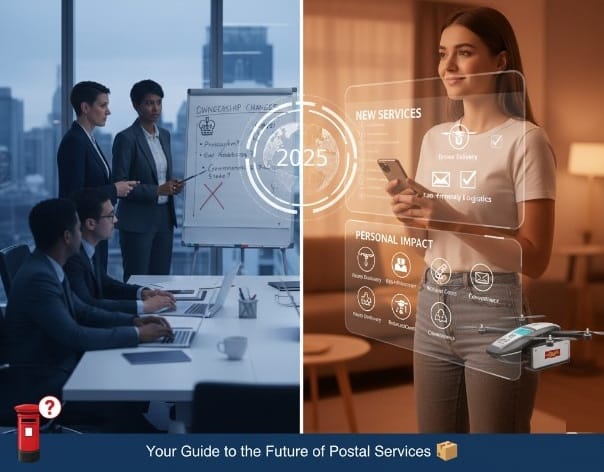
Royal Mail in 2025: Ownership Changes, Service Shifts, and What It Means for You
Introduction
Royal Mail has long been a cornerstone of British life, connecting communities and businesses for centuries. Yet in 2025, the postal giant is undergoing one of the most transformative periods in its modern history. From a high-profile takeover to regulatory changes and service reforms, Royal Mail is at a crossroads that directly affects everyday customers, small businesses, and employees alike.
In this article, we’ll break down what’s happening at Royal Mail, why it matters, and what you should do to prepare for the changes.
A New Chapter: The Takeover by Daniel Křetínský
In 2024, the Czech billionaire Daniel Křetínský, through his EP Group, completed a £3.6 billion takeover of International Distribution Services (IDS), Royal Mail’s parent company. The move sparked debate in the UK Parliament, trade unions, and the media.
- Why it matters: Ownership changes often lead to restructuring, new strategies, and cost-cutting measures.
- Case in point: When Deutsche Post underwent restructuring after privatization, service frequency shifted, and customers had to adapt to new delivery expectations. Royal Mail could be heading in a similar direction.
Leadership Shake-Ups and Uncertainty
Following the takeover, Royal Mail faced turbulence at the top. In mid-2025, CEO Emma Gilthorpe stepped down after less than a year in the role. A temporary executive team stepped in, highlighting the transitional—and uncertain—nature of the company’s current direction.
- Impact: Leadership instability can delay decision-making and prolong uncertainty for both employees and customers.
Service Changes: Fewer Deliveries, Higher Costs
Royal Mail’s performance reports revealed mixed results. While 92% of Second Class mail was delivered within three working days in 2024–25, regulators flagged ongoing service issues.
In response, Ofcom approved reforms to the Universal Service Obligation (USO):
- End of Saturday deliveries for Second Class mail.
- Reduction in delivery frequency to alternate days in some regions.
At the same time, postage prices have been rising. For households, this means slower services at higher costs.
👉 Practical Tip for Customers:
- If speed matters, choose First Class or tracked services instead of relying on Second Class.
- For businesses, bulk mailing alternatives or private couriers may be worth exploring during peak seasons.
Union Battles: Workers vs. Management
The Communication Workers Union (CWU) continues to play a major role in Royal Mail’s story. The union has warned against job cuts, service reductions, and foreign ownership influence.
- Real Example: In 2023, Royal Mail strikes disrupted Christmas deliveries nationwide. While no large-scale strikes have been confirmed in 2025, tensions remain high.
- Why it matters for customers and businesses: Service disruptions could occur if negotiations break down, especially around pay and working conditions.
Financial Performance: From Losses to Recovery
Royal Mail has struggled financially in recent years, posting losses due to declining letter volumes and rising parcel competition. However, following restructuring efforts and cost-cutting, reports indicate a slow return to profitability in 2025.
- Case Study: Small Online Retailers
Sarah, an Etsy shop owner in Manchester, saw her shipping costs increase by 15% after Royal Mail’s price adjustments. She adapted by offering “free shipping” only on orders above £40, offsetting costs while keeping customers happy.
👉 Practical Tip for Businesses:
- Review your shipping strategy quarterly. Pass some costs to customers while offering incentives for larger orders to absorb postage hikes.
Looking Ahead: What Customers Should Expect
The future of Royal Mail will depend on how successfully the new owners balance profitability with public service obligations.
- Likely Trends:
- More reliance on automation and parcel sorting technology.
- Continued reduction in letter delivery frequency.
- Potential further increases in postage prices.
- Closer scrutiny from Ofcom and UK politicians.
👉 Practical Tip:
Stay updated by following Royal Mail’s official service announcements and sign up for alerts if you rely on deliveries for business.
Conclusion
Royal Mail is at a historic turning point. Ownership changes, regulatory reforms, and financial pressures are reshaping the way Britain’s iconic postal service operates. While this may bring challenges—slower deliveries, higher costs, and ongoing union tensions—it also opens opportunities for innovation in logistics and digital services.
For now, both customers and businesses must adapt quickly to the “new normal” of Royal Mail in 2025.
🔑 Interactive Question
How have recent changes at Royal Mail affected you—have you noticed slower deliveries, higher costs, or had to change your shipping habits? Share your experience in the comments!
⚡ CTA:
👉 Want to stay ahead of service changes? Bookmark Royal Mail’s Service Updates Page and sign up for alerts to avoid delivery surprises.