Introduction
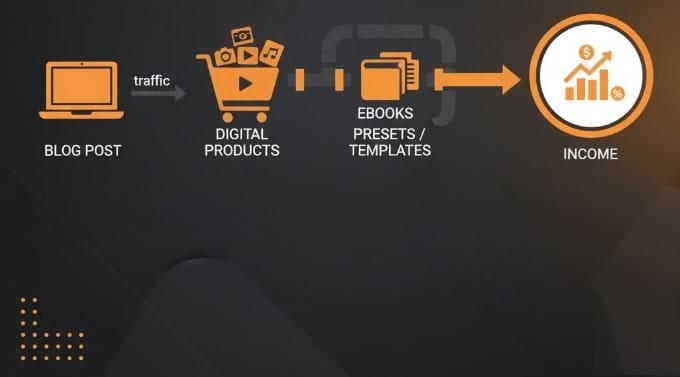
Your blog is more than a content platform—it can be a digital store.
By selling digital products, you can turn your expertise into passive income, build authority, and diversify your revenue streams.
Unlike physical products, digital items require no inventory or shipping, making them perfect for bloggers who want scalable income.
This article will guide you through creating, marketing, and selling digital products through your blog successfully.
1. Why Sell Digital Products on Your Blog
Digital products are ideal for bloggers because they allow you to:
- Monetize your expertise: Teach skills or share knowledge you already have.
- Scale income without extra work: One product can sell to thousands.
- Build authority: Offering high-value products positions you as an expert.
- Diversify revenue: Combine with ads, affiliates, or coaching for stability.
💡 Example: A finance blogger can sell a budgeting template; a tech blogger can sell AI workflow guides.
2. Choosing the Right Digital Product
Your product should solve a specific problem for your audience.
Popular Digital Product Types:
- Ebooks & Guides: Teach a step-by-step process.
- Online Courses: Video or text-based courses for skill-building.
- Templates & Worksheets: Spreadsheets, planners, or checklists.
- Printables: PDFs for planners, calendars, or creative use.
- Software & Tools: Apps, plugins, or scripts.
- Membership Content: Premium access to articles, tutorials, or resources.
🎯 Tip: Start with one product and expand gradually to avoid overwhelm.
3. Planning & Creating Your Product
Quality is key. Your product should deliver real results.
Steps to Create a Successful Product:
- Identify a pain point your audience has.
- Define the transformation your product delivers.
- Outline content in modules or chapters.
- Use professional tools:
- Canva for designs & templates
- Google Docs / Word for guides
- Loom / OBS Studio for video tutorials
- Notion / ClickUp for workflow systems
- Test your product with a small group for feedback before launch.
💡 Pro Tip: Focus on actionable results—your product should save time, teach a skill, or simplify a task.
4. Pricing Your Digital Product
Pricing depends on value, demand, and audience size.
Guidelines:
| Product Type | Suggested Price | Notes |
|---|---|---|
| Templates / Printables | $5–$25 | Low-entry, impulse buys |
| Ebooks & Guides | $15–$50 | Moderate value, easy delivery |
| Mini-Courses | $50–$150 | Short, high-impact learning |
| Full Courses / Workshops | $200–$500+ | High-value, premium buyers |
| Membership Access | $10–$50/month | Recurring revenue |
💡 Tip: Offer tiered pricing or bundles to appeal to different budgets.
5. Hosting & Selling Your Products
Several platforms make selling digital products seamless.
| Platform | Best For | Notes |
|---|---|---|
| Gumroad | Beginners | Easy setup, handles delivery & payments |
| Podia | Courses & memberships | All-in-one for creators |
| Shopify / WooCommerce | Full ecommerce integration | Ideal for WordPress blogs |
| E-junkie / Payhip | Simple digital downloads | Lightweight and reliable |
| Teachable / Thinkific | Courses | Professional course management |
⚙️ Tip: For WordPress, WooCommerce with digital product settings is ideal for full control and branding.
6. Marketing Your Digital Products
A product alone won’t sell—you need a strategy.
Proven Marketing Techniques:
- Blog Content Marketing: Write posts that solve related problems and link to your product.
- Lead Magnets & Email Funnels: Offer free content to grow your list, then upsell.
- Social Media: Share teasers, tips, or testimonials.
- Webinars & Free Workshops: Convert engaged readers into buyers.
- Bundles & Discounts: Encourage multiple purchases at once.
- Affiliate Partnerships: Let others promote your product for a commission.
💡 Pro Tip: Always emphasize the results or transformation your product offers.
7. Delivering Your Product
Ensure a seamless experience for buyers:
- Instant downloads via PDF or video link.
- Password-protected pages for courses or memberships.
- Clear instructions for templates or tools.
- Prompt email support for troubleshooting.
📩 Automation Tools: Gumroad, Podia, and WooCommerce handle delivery automatically.
8. Scaling Your Digital Product Business
Once your first product is selling, scale intelligently:
- Repurpose content: Turn blog posts into templates or mini-courses.
- Create product series: Bundle multiple guides or lessons.
- Increase reach: Run paid ads or collaborate with other bloggers.
- Offer upsells: Add coaching sessions or advanced courses.
- Membership models: Create recurring income with exclusive access.
9. Common Mistakes to Avoid
❌ Ignoring audience needs and creating products nobody wants.
❌ Underpricing or undervaluing your work.
❌ Poor presentation or design quality.
❌ Neglecting marketing—relying on blog traffic alone.
❌ Complicating delivery or support—keep it simple.
💬 Rule of Thumb: High-quality products + clear marketing = repeatable sales.
10. Final Thoughts
Selling digital products on your blog is one of the most scalable ways to monetize your expertise.
With a strong product, clear messaging, and effective marketing, even a small blog audience can generate significant income.
Create something that helps. Promote it strategically. Scale it smartly.
Your blog isn’t just content—it’s a digital business waiting to grow.