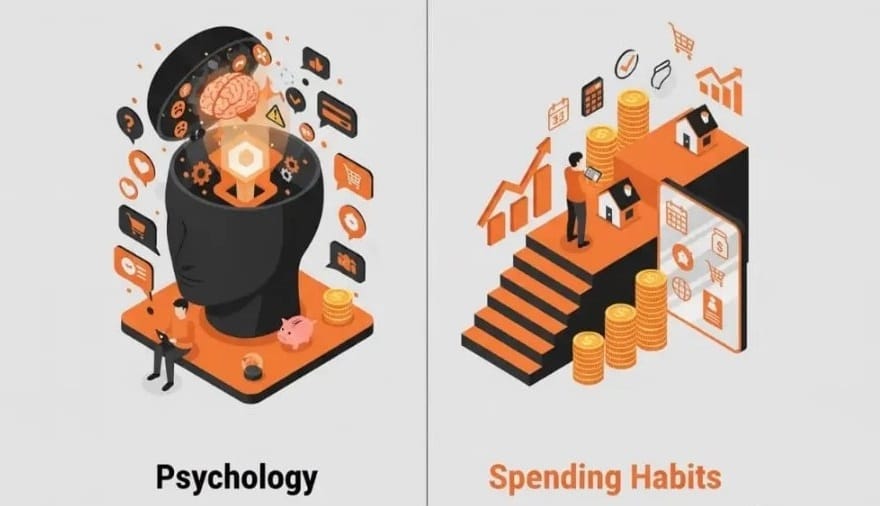
Money management is more than numbers — it’s deeply psychological.
Your spending habits reveal not just what you buy, but why you buy it, reflecting your beliefs, emotions, and relationship with money.
Understanding the psychology behind spending habits allows you to make smarter decisions, save effectively, and build long-term wealth — all while reducing stress and emotional triggers.
1. Why We Spend: Emotional Triggers
Spending is rarely purely rational. Common emotional triggers include:
- Stress relief: Shopping as a coping mechanism for anxiety or tension
- Rewarding yourself: Treating yourself after milestones or hard work
- Social influence: Buying to keep up with friends, trends, or status
- Fear and scarcity: Hoarding or impulsive buying to feel secure
Recognizing your triggers is the first step toward intentional financial behavior.
2. Money Mindset Shapes Spending Behavior
Your mindset determines how you interact with money:
- Scarcity mindset: Leads to fear-driven purchases, overthinking, or under-spending
- Abundance mindset: Encourages strategic spending, long-term planning, and investments
- Self-worth and money: If you tie your value to income, you may overspend to prove yourself or underspend out of guilt
Shifting your mindset is essential for smarter, goal-oriented finance.
3. Cognitive Biases That Influence Spending
Behavioral finance shows that our brains use shortcuts, often leading to poor financial decisions:
| Bias | Impact on Spending |
|---|---|
| Immediate Gratification | Prioritizing wants over needs, impulsive buying |
| Loss Aversion | Avoiding financial risks, overspending to “secure” happiness |
| Herd Behavior | Following trends and peer spending habits |
| Anchoring | Comparing prices to arbitrary reference points, overpaying |
| Confirmation Bias | Justifying purchases with selective information |
Awareness of these biases helps break the patterns and reclaim control over finances.
4. Strategies to Align Spending with Goals
1. Track Your Expenses
Know exactly where your money goes. Categorize purchases into needs, wants, and investments.
2. Set Emotional and Financial Boundaries
Pause before purchases and ask:
“Does this align with my values or is it an emotional reaction?”
3. Automate Savings and Investments
Reduce emotional influence by automating key financial habits.
4. Reflect on Past Spending
Review past months to identify emotional spending patterns and areas for improvement.
5. Prioritize Value Over Volume
Spend on what truly matters — experiences, growth, and meaningful items — not mindless consumption.
5. The Feedback Loop: Spending Reflects Identity
Your spending acts as a mirror of your financial identity:
- Frequent impulse buys → unmet emotional needs
- Strategic, value-driven purchases → long-term planning and self-discipline
- Generous spending → abundance mindset and empathy
- Neglect of savings → avoidance or fear around money
Changing spending habits starts with changing self-perception and mindset.
6. The Role of Mindfulness in Smart Finance
Mindful spending involves awareness, intention, and reflection:
- Be present when making financial decisions
- Connect purchases to long-term goals
- Avoid autopilot spending driven by emotion
- Use financial journaling or tracking apps to reinforce habits
Mindfulness transforms money from a source of stress into a tool for empowerment.
7. Building Financial Intelligence Through Psychology
Smart finance combines knowledge and self-awareness:
- Understand why you spend
- Identify patterns and triggers
- Implement systems that align money with values
- Cultivate a mindset of abundance, not fear
This approach strengthens both emotional and financial resilience.
Conclusion
Your spending habits are a window into your mind.
Money is not just what you have — it’s how you think, feel, and act.
By understanding the psychology behind spending, you can align your habits with your goals, reduce stress, and create a financial life that reflects values, discipline, and abundance.
Smart finance is psychology in action — when your money reflects your mindset, you gain clarity, control, and long-term wealth.