Introduction
Blogging has evolved far beyond personal storytelling — it’s now a full-fledged digital business model.
One of the most lucrative ways to monetize your content is through sponsored posts — paid collaborations where brands pay you to feature their product or service.
But how do you actually attract brands?
How do you make them want to pay you for your voice, your audience, and your influence?
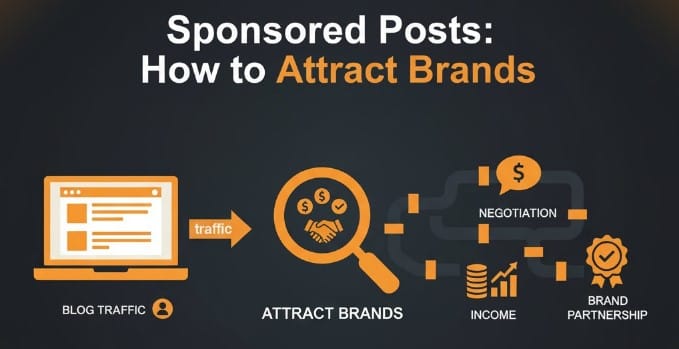
This article walks you through the exact process professional bloggers use to land consistent sponsored post deals, build credibility, and turn brand partnerships into sustainable digital income.
1. What Are Sponsored Posts?
A sponsored post is paid content created in collaboration with a brand that aligns with your blog’s niche and audience.
The brand gains visibility and engagement, while you earn income and strengthen your authority as a trusted content creator.
Common Types of Sponsored Content:
- Product reviews or tutorials — You test and share your honest experience.
- Brand features or interviews — You highlight a company’s story or service.
- Giveaways or contests — You host campaigns to engage your readers.
- Integrated mentions — You naturally include a product in your regular content.
💡 Pro Tip: Always ensure sponsorships fit your niche and your readers’ interests — authenticity builds long-term brand trust.
2. Why Brands Pay for Sponsored Posts
Brands are constantly seeking ways to connect with audiences in a more authentic, human way — and that’s where bloggers come in.
Here’s what makes you valuable to them:
- You have a targeted audience that matches their market.
- You offer organic engagement and credibility.
- You create quality, long-form content that ranks on search engines.
- You bring storytelling that traditional ads can’t replicate.
🧠 Insight: Brands aren’t just buying exposure — they’re buying trust through your voice.
3. Build a Blog That Attracts Brands Naturally
Before brands approach you, your blog should reflect professionalism, clarity, and consistency.
Key Elements of a Brand-Ready Blog:
- Clear Niche: Focus on one or two related topics (e.g., “AI Tools” or “Digital Income”).
- Professional Design: Clean layout, mobile-friendly theme, and easy navigation.
- Consistent Posting: Publish regularly — brands prefer active creators.
- About Page: Tell your story, values, and mission clearly.
- Contact Page: Make it easy for brands to reach you.
- Engaged Audience: Quality engagement beats large numbers.
💬 Example: A blog that consistently reviews digital tools will naturally attract SaaS brands, affiliate programs, or startups in tech.
4. Create a Strong Media Kit
A media kit is your professional portfolio — a document (usually PDF or webpage) that shows why brands should collaborate with you.
What to Include:
- Blog overview and mission
- Audience demographics (age, country, interests)
- Monthly traffic and engagement stats
- Social media following and growth
- Past collaborations or testimonials
- Collaboration options (posts, reviews, campaigns)
- Pricing structure and contact info
💡 Pro Tip: Keep your media kit short, visual, and regularly updated. Use Canva or Notion templates for quick, elegant designs.
5. How to Find and Approach Brands
You don’t need to wait for brands to contact you — be proactive!
A. Identify Ideal Partners
Look for brands that already advertise or collaborate with creators in your niche:
- Products you already use and love.
- Competitors of brands that sponsor your peers.
- Tools or services your readers would genuinely benefit from.
B. Research Before You Pitch
- Visit the brand’s website and social media.
- Understand their tone, values, and current marketing style.
- Identify how your content can help them reach new customers.
C. Send a Personalized Pitch
Here’s a simple, effective structure for your outreach email:
Subject: Collaboration Idea — [Your Blog Name] x [Brand Name]
Hi [Name],
I’ve been following [Brand Name] for a while and truly love how you [mention specific thing you admire].
I run [Your Blog Name], a [short blog description + niche]. My audience consists mainly of [describe readers].
I’d love to explore a sponsored post collaboration that could highlight [specific idea].
You can find my media kit attached with blog stats and audience insights.
Looking forward to hearing your thoughts,
[Your Full Name]
[Your Website] | [Email] | [Social Links]
🧠 Pro Tip: Always focus on how you can help the brand achieve its goals — not just what you want.
6. How to Price Your Sponsored Posts
Pricing can vary depending on niche, audience size, and brand reputation — but you should always charge for your time, creativity, and influence.
| Audience Size | Typical Price Range | Notes |
|---|---|---|
| <10K monthly readers | $75–$250 | Niche or local brands |
| 10K–50K readers | $300–$800 | Mid-tier partnerships |
| 50K–100K+ readers | $1,000–$3,000+ | Larger campaigns or exclusives |
💡 Include add-ons: charge extra for:
- Newsletter mention
- Instagram post or Reel
- Blog sidebar ad placement
- Video integration
⚖️ Pro Tip: Always use a written agreement defining deliverables, deadlines, and payment terms before publishing.
7. Boosting Your Visibility to Brands
Even before you pitch, you can attract attention organically.
Ways to make brands find you:
- Add a “Work with Me” page on your blog.
- Optimize posts for brand-related keywords.
- Use hashtags like #bloggercollab or #sponsoredpost on social media.
- Join influencer platforms such as:
- Aspire.io
- Influence.co
- Intellifluence
- CreatorIQ
- Collabor8
📈 Tip: Share consistent results — engagement metrics, click-throughs, and positive feedback to show ROI potential.
8. Maintaining Long-Term Brand Relationships
Landing a collaboration is great — but turning one deal into many is even better.
Best Practices for Retention:
- Deliver all work on time and exceed expectations.
- Send campaign performance stats afterward.
- Share honest feedback and audience insights.
- Check in every few months with new content ideas.
💬 Pro Tip: The goal is to become a long-term partner, not a one-time transaction.
9. Legal & Ethical Considerations
Transparency builds credibility. Always:
- Disclose sponsorships using tags like “Sponsored” or “Ad.”
- Avoid promoting products you don’t believe in.
- Follow FTC or local advertising guidelines.
Honesty doesn’t hurt engagement — it builds trust and authority.
10. Final Thoughts
Sponsored posts are not just about money — they’re about strategic partnerships that align your content with brands that truly serve your readers.
Start small. Build relationships. Deliver results.
Once you establish credibility, brands will start approaching you — and your blog becomes more than a platform… it becomes a profitable digital brand.
Collaborate with purpose. Create with integrity. Earn with consistency.