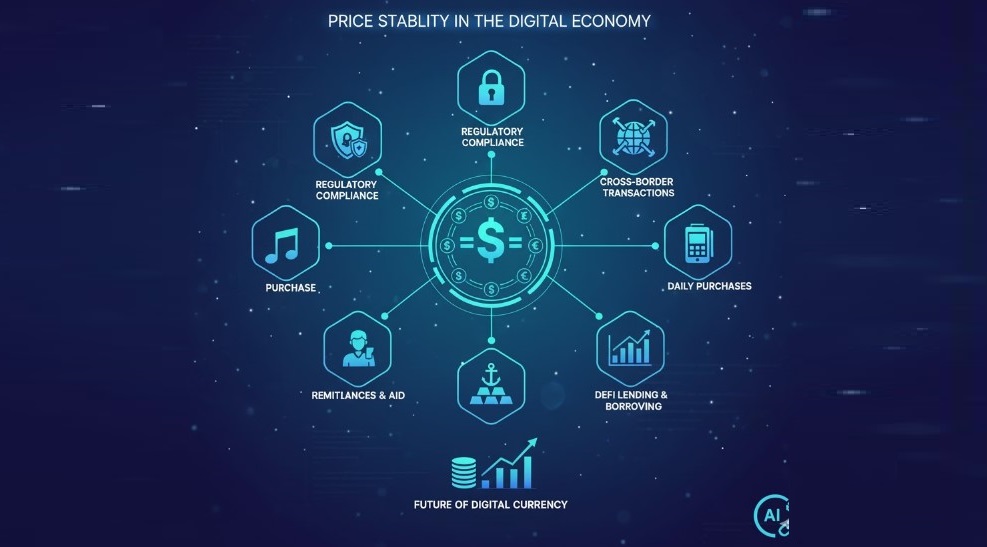
Stablecoins have become a cornerstone of the cryptocurrency ecosystem, bridging the gap between volatile digital assets and traditional finance. In 2025, stablecoins are no longer just tools for trading—they are increasingly regulated, widely adopted, and powering real-world financial applications.
Understanding stablecoins, their new rules, and their practical use cases is essential for investors, developers, and everyday users navigating today’s Web3 economy.
What Are Stablecoins?
A stablecoin is a type of cryptocurrency designed to maintain a stable value, typically pegged to a fiat currency like the US dollar or a commodity like gold. Unlike Bitcoin or Ethereum, whose prices fluctuate dramatically, stablecoins aim to minimize volatility, making them practical for transactions, savings, and payments.
Types of Stablecoins in 2025:
- Fiat-Collateralized Stablecoins – Backed 1:1 by fiat reserves (e.g., USDC, USDT).
- Crypto-Collateralized Stablecoins – Backed by other cryptocurrencies but over-collateralized to manage volatility (e.g., DAI).
- Algorithmic Stablecoins – Use smart contracts to automatically balance supply and demand without direct collateral (emerging cautiously due to past failures).
The New Rules for Stablecoins in 2025
Regulatory clarity is finally arriving. After years of debates, governments and international bodies are introducing frameworks to make stablecoins safer for users and financial systems. Key rules include:
- Mandatory Reserves – Stablecoins must maintain fully audited reserves, often in real-time, to ensure redemption.
- Transparency Requirements – Issuers must publicly report holdings and ensure third-party verification.
- Consumer Protections – Users must have guarantees in case of insolvency or mismanagement.
- Cross-Border Standards – Global initiatives, such as by the Financial Stability Board (FSB), are standardizing stablecoin operations to prevent systemic risk.
Example: Circle’s USDC now provides real-time reserve audits in 2025, allowing users to verify that every token is backed by actual dollars.
Use Cases for Stablecoins in 2025
Stablecoins are no longer just a trading tool—they are embedded in a wide range of financial and practical applications:
1. Payments and Remittances
Stablecoins offer instant, low-fee transfers globally. Migrant workers can send money home without paying high remittance fees, and merchants can accept digital payments without the volatility of traditional cryptocurrencies.
Example: A freelancer in Morocco can receive payment from a US client in USDC, instantly convert to local currency, and avoid bank delays or high fees.
2. Decentralized Finance (DeFi)
Stablecoins are the backbone of DeFi platforms, enabling:
- Lending and borrowing without traditional banks
- Yield farming and liquidity pools
- Collateral for synthetic assets
Experience Insight: A DeFi user in 2025 can earn 6–12% APY on USDC deposits in decentralized lending protocols—far above traditional savings accounts.
3. Corporate Treasury Management
Companies now hold stablecoins to manage cross-border transactions, hedge against local currency inflation, and access faster settlements.
Example: Multinational corporations like Shopify and Tesla have integrated USDC and other regulated stablecoins to streamline global payments.
4. Programmable Money
Smart contracts allow stablecoins to power automatic recurring payments, subscriptions, or decentralized payrolls. AI-driven systems can trigger payments in stablecoins based on real-time data.
5. Emerging Web3 Economies
From virtual real estate in Metaverses to NFT marketplaces, stablecoins are increasingly used as native currency, providing stability for trading digital assets without worrying about volatility.
Challenges and Considerations
Despite their growth, stablecoins come with challenges:
- Regulatory Compliance – Issuers must adhere to increasingly strict global standards.
- Centralization Risks – Some fiat-backed stablecoins rely on centralized entities, which can be points of failure.
- Algorithmic Risk – Algorithmic stablecoins have historically struggled to maintain their peg.
Being informed and cautious is critical, especially for investors or businesses using stablecoins in large volumes.
Conclusion
Stablecoins in 2025 are more than just crypto tokens; they are regulated, reliable, and essential tools in modern finance. Whether for global payments, DeFi participation, corporate treasury management, or Web3 transactions, stablecoins provide a bridge between traditional and digital economies.
With clear rules, technological innovation, and expanding use cases, stablecoins are shaping the future of finance—offering stability in an otherwise volatile world.