Introduction
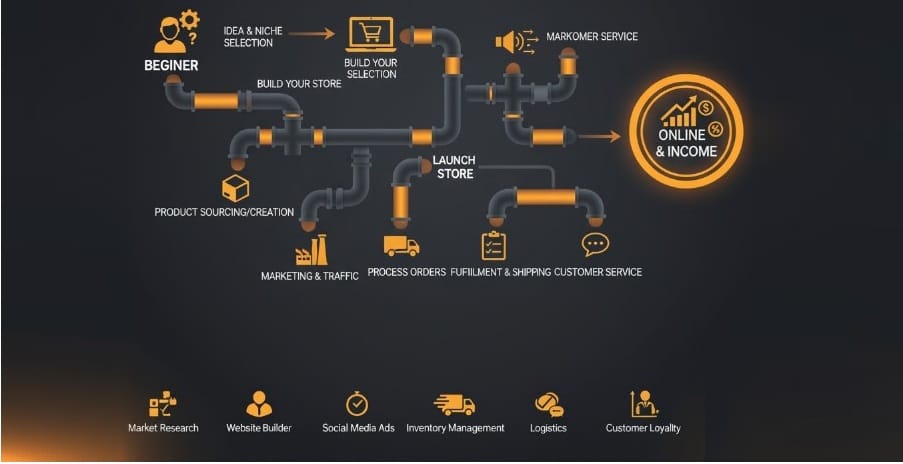
The digital economy has made it easier than ever to start your own business online. Whether you want to sell physical products, digital goods, or dropshipping items, launching an e-commerce store can generate sustainable income and scale quickly with the right strategy.
This guide is designed for beginners who want to turn their ideas into a fully operational online store, from planning to marketing and sales.
1. Why E-Commerce is a Great Opportunity
E-commerce allows anyone with a computer and internet connection to reach a global audience.
Benefits include:
- Low startup cost for digital products or dropshipping
- Scalability as traffic and sales grow
- Flexibility to manage the business anywhere
- Diverse revenue streams, including physical products, memberships, and digital downloads
💡 Example: Bloggers can sell digital templates, online courses, or branded merchandise to their audience without holding inventory.
2. Choosing Your Niche and Products
Your store’s success depends on selecting a focused niche.
Steps to Identify Your Niche:
- Analyze your audience or target market.
- Research demand using Google Trends, Amazon, or niche forums.
- Validate ideas with surveys or pre-launch campaigns.
- Decide between physical products, digital goods, or dropshipping.
Popular Options for Beginners:
- Digital products: ebooks, guides, templates, online courses
- Physical products: small electronics, apparel, home goods
- Dropshipping: products shipped directly from suppliers to customers
⚡ Pro Tip: Start small, perfect one product line, then expand.
3. Choosing Your E-Commerce Platform
Selecting the right platform simplifies setup and management.
| Platform | Best For | Notes |
|---|---|---|
| Shopify | Beginners & all-in-one store | Hosted, easy setup, scalable |
| WooCommerce (WordPress) | Bloggers & WordPress users | Full control, flexible, wide plugin ecosystem |
| BigCommerce | Growing stores | Enterprise-level features, scalable |
| Gumroad / Podia | Digital products | Simple setup, handles payments & delivery |
| Printful / Printify | Print-on-demand | Integrates with Shopify or WooCommerce |
💡 Tip: WooCommerce is perfect for bloggers who already have a WordPress site.
4. Designing Your Store for Conversions
A successful store must be user-friendly and persuasive.
Design Best Practices:
- Mobile-friendly and fast-loading layout
- Clear product images and descriptions
- Simple navigation and search functionality
- Highlight bestsellers and promotions
- Trust signals: reviews, guarantees, secure checkout
- Strong call-to-actions like “Buy Now” or “Get Instant Access”
⚡ Pro Tip: A professional-looking store increases trust and encourages sales.
5. Marketing Your E-Commerce Store
Even the best products need effective marketing.
Strategies for Beginners:
- Content Marketing: Write blog posts related to your products.
- Email Marketing: Build a list and send product updates, tips, and offers.
- Social Media: Share product demos, behind-the-scenes content, and user-generated content.
- SEO Optimization: Target keywords to attract organic traffic.
- Paid Advertising: Google Ads, Facebook Ads, and Instagram Ads.
- Collaborations & Influencers: Reach new audiences through partnerships.
💡 Tip: Leverage your blog or social channels to drive targeted traffic.
6. Pricing and Profit Margins
Pricing affects sales and profitability.
Guidelines:
- Digital products: high margin, low overhead
- Physical products: include shipping, production, and platform fees
- Dropshipping: factor in supplier costs and shipping
- Offer bundles or upsells to increase revenue per transaction
📈 Example: Selling a digital course for $50 may yield 90–95% profit margin after minimal costs, while a physical product may yield 40–50%.
7. Managing Operations
Operational efficiency ensures smooth sales and happy customers.
Key Areas:
- Inventory & fulfillment: track products or rely on dropshipping partners
- Customer support: respond promptly to inquiries
- Order tracking: automated emails for shipment and delivery
- Returns & refunds: clear, simple policies
⚡ Tip: Automate repetitive tasks like order confirmation and delivery notifications to save time.
8. Scaling Your E-Commerce Store
Once your store is running, focus on growth.
Strategies:
- Expand product lines with complementary items
- Introduce premium or subscription products
- Implement loyalty programs or referral incentives
- Invest in marketing campaigns to reach new audiences
💬 Insight: Scaling isn’t just about more traffic—it’s about higher revenue per visitor through upsells, bundles, and better conversions.
9. Common Beginner Mistakes
❌ Selling products unrelated to your audience
❌ Ignoring mobile optimization
❌ Overcomplicating checkout or website navigation
❌ Failing to market effectively
❌ Neglecting analytics and optimization
✅ Rule of Thumb: Focus on niche alignment, user experience, and marketing to build a sustainable store.
10. Final Thoughts
Starting your first e-commerce store may seem daunting, but with the right niche, platform, and marketing strategy, it can become a sustainable digital income stream.
Plan strategically, launch thoughtfully, and market consistently.
Your e-commerce store is more than a website—it’s a business, a brand, and a pathway to financial freedom.