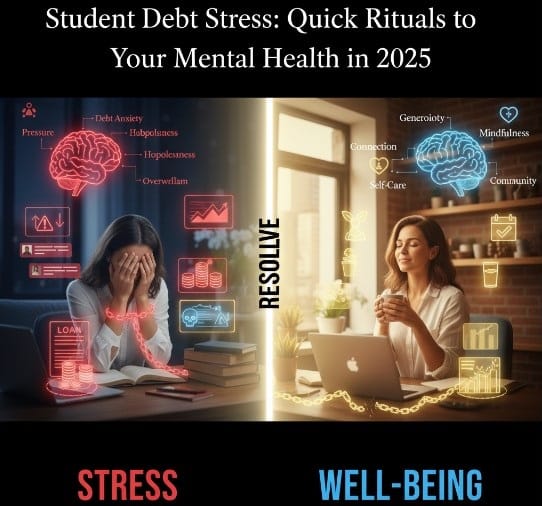
Why Student Debt Feels Heavier Than It Looks
Student loans aren’t just numbers on a statement. They show up in your thoughts at night, in the hesitation when friends plan a trip, and in the worry about “falling behind in life.”
Research shows that financial stress is one of the strongest predictors of anxiety and depression. For borrowers, this means debt repayment isn’t just financial—it’s emotional.
But here’s the good news: you can’t erase debt overnight, but you can train your mind and body to carry it without breaking down.
Quick Stress-Relief Rituals for Borrowers
These small, science-backed practices won’t make loans disappear, but they will help you reclaim calm, focus, and resilience.
1. The 5-Minute Breathing Reset
Inhale for 4 seconds, hold for 4, exhale for 6. Repeat for five minutes. This regulates stress hormones and creates instant calm before tackling financial tasks.
2. Debt Journaling
Write your biggest money worry in one line. Then write one small action you can take today (e.g., “Pay $20 extra” or “Skip one takeout meal”). Shifting focus from worry to action breaks the anxiety loop.
3. Gratitude Anchor
List three things your education or career path has already given you—skills, connections, or opportunities. This reframes debt as an investment rather than a life sentence.
4. Micro-Movement Break
After checking your balance or making a payment, stand up, stretch, or walk for two minutes. Movement signals your brain to separate financial tasks from emotional overwhelm.
5. Digital Boundaries
Stop checking balances daily. Set one weekly “money date” instead. Protecting your mental space prevents constant re-triggering of debt-related stress.
Why These Rituals Work
Each ritual combines psychology (reframing thought patterns) with physiology (resetting your nervous system). Together, they prevent the spiral of stress → avoidance → guilt → more stress.
The goal isn’t to ignore debt—it’s to build enough mental space to keep making progress without emotional exhaustion.
Looking Ahead
In 2025, the student debt conversation is shifting. It’s no longer only about interest rates and repayment schedules—it’s also about mental health sustainability. Borrowers who learn to manage stress alongside their money are the ones who stay consistent and motivated for the long run.
Conclusion: Carry the Debt, Not the Stress
Student debt may take years to pay off, but stress doesn’t have to stay with you for the journey. By practicing small rituals, you reclaim calm, resilience, and focus—turning repayment into a steady, manageable process.
🔑 Question for You: Which one of these rituals could you try this week to feel lighter while managing your student debt?
Light CTA:
If this guide helped you, share it with a friend who’s carrying student loans. Sometimes the best support is knowing you’re not alone.