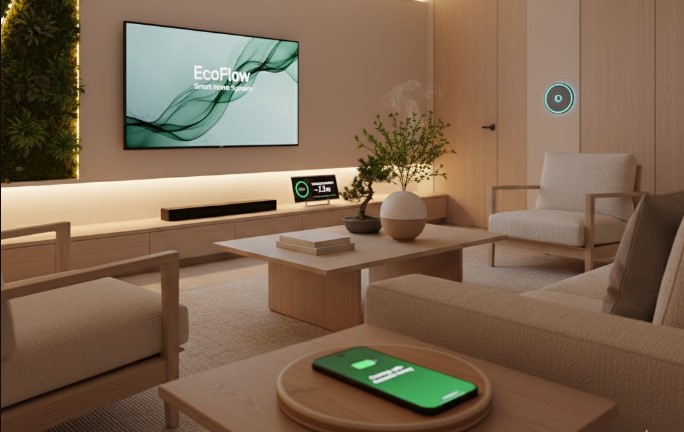
Introduction: The New Marriage of Sustainability and Simplicity
In 2025, design is not just about beauty — it’s about balance.
Consumers are demanding technologies that not only look clean but live clean.
Minimalism is evolving from an aesthetic principle into an eco-ethical philosophy — where less isn’t just more, it’s responsible.
“We no longer separate visual simplicity from environmental impact,” says Rina Okada, head of sustainability design at Sony.
“A product that’s truly minimal should also minimize waste.”
Welcome to the era of Sustainable Minimalism — where clean design meets green technology to create experiences that are elegant, efficient, and kind to the planet.
1. The Roots of Sustainable Minimalism
Minimalism in tech started as a fight against visual clutter. Sustainability in tech began as a battle against material waste.
In 2025, these two ideals have fused into a single mission: reduce excess in every dimension — design, code, packaging, and energy.
The Core Philosophy
- Do more with less hardware
- Use renewable materials and recyclable components
- Optimize digital efficiency to lower carbon impact
- Design for longevity, not obsolescence
This movement isn’t about sterile design — it’s about purposeful restraint.
2. How Tech Companies Are Redefining “Minimal”
2.1 Apple’s Circular Design Vision
Apple’s 2025 MacBook Air is made from 100% recycled aluminum, with a 30% lower carbon footprint.
Its minimal design now symbolizes maximum responsibility — an aesthetic grounded in environmental ethics.
2.2 Google’s Eco-Interface Movement
The new Material You Green update for Android uses adaptive brightness to reduce energy use by up to 15%.
It’s minimalism for both the eyes and the Earth.
2.3 Fairphone’s Modular Ethics
The Dutch brand Fairphone shows that minimalism can be repairable. Each device is modular, easy to fix, and designed to last — a quiet rebellion against disposable tech culture.
3. The Human Side: How Users Feel the Change
3.1 The Designer Who Downsized Digitally
Leah Torres, a UX designer from Toronto, explains:
“I realized every unused app, every file, every notification had a footprint. So I decluttered — not just my workspace, but my digital life.”
Her move to minimalist software tools reduced both her energy usage and her mental noise.
3.2 The Company That Made Efficiency a Core Value
SaaS startup EcoStack built an AI-based analytics tool that uses 40% fewer compute resources by optimizing processing intervals.
The result: lower emissions, faster performance, happier users.
“Minimal code. Minimal servers. Maximum impact,” says founder Jonas Rahim.
4. Digital Sustainability: The Invisible Carbon Cost
Few realize that every digital action — a search, a file upload, a cloud sync — uses energy.
According to a 2025 report by The Shift Project, the internet accounts for 4.2% of global CO₂ emissions, up from 3.7% in 2020.
Sustainable minimalism addresses this by:
- Streamlining code and website assets
- Reducing video autoplay and heavy media
- Implementing dark mode energy savings
- Using edge computing to shorten data travel distances
“A faster, lighter website is not just good UX — it’s good for the planet,” notes Hiroshi Tanaka, GreenWeb Alliance founder.
5. The Design Language of Sustainability
Minimalist eco-design is visually calm but ethically powerful.
Here’s what defines it:
| Design Element | Sustainable Minimalist Approach | Result |
|---|---|---|
| Materials | Recycled metals, bioplastics, low-impact dyes | Lower waste |
| Color Palette | Muted earth tones, natural gradients | Visual calm |
| Packaging | Biodegradable or reusable materials | Zero plastic |
| Interface Design | Simple layouts, energy-saving animations | Efficiency |
| Product Lifecycle | Designed for repair, resale, recycling | Longevity |
This philosophy makes sustainability feel good — not forced.
6. Emotional Minimalism Meets Environmental Ethics
The best sustainable products also feel emotionally minimal — they calm the mind while respecting the Earth.
Example:
- The Nothing Phone (3) has transparent, recyclable materials and simplified interface gestures. The experience feels pure, almost meditative.
- Tesla’s Model Y Eco-UI now adjusts dashboard brightness and system performance for optimal battery and energy balance — a design that thinks green.
It’s the merging of emotional intelligence and environmental intelligence — tech that’s both soothing and sustainable.
7. Sustainable Minimalism in Everyday Tech
Software:
- Notion Green Mode reduces processor load by simplifying motion effects.
- Brave Browser offers carbon-aware browsing metrics, showing users their digital footprint.
Hardware:
- Framework Laptop parts are fully replaceable.
- Samsung’s Solar Remote charges with indoor light — one of 2025’s most subtle examples of functional minimalism.
8. The Business Value of Doing Less
Consumers are voting with their wallets.
According to McKinsey’s Green Market Report (2025):
- 63% of global users prefer sustainable tech brands.
- 41% are willing to pay more for eco-friendly devices.
- Companies with transparent carbon design see a 25% higher brand trust index.
In other words, doing less creates more loyalty.
“Sustainability is no longer a CSR add-on — it’s a brand identity,” says Nadia Chen, sustainability strategist at IDEO.
9. How to Design for Sustainable Minimalism
Step 1: Start with Material Honesty
Choose recycled and renewable materials that align with a circular economy.
Step 2: Design for Longevity
Build hardware and interfaces that evolve through updates instead of replacement.
Step 3: Simplify Interactions
Remove redundant features; focus on core experiences that matter most.
Step 4: Track Your Digital Footprint
Monitor energy consumption and optimize for low-power modes.
Step 5: Communicate Transparency
Show users their sustainability impact — dashboards, carbon counters, or visual badges.
10. The Future of Green Tech and Clean Design
By 2030, experts predict that sustainable minimalism will become the baseline standard for all major tech products.
AI systems will automatically optimize device energy, and circular design will be integrated from concept to end-of-life.
“The next generation of devices will not just be smarter — they’ll be lighter, slower, calmer,” predicts Dr. Milan Ortiz, environmental design researcher.
The future of innovation will be measured not by how much we create, but by how little we waste.
Conclusion: A Cleaner Future by Design
Sustainable minimalism is more than a design trend — it’s a manifesto for mindful innovation.
It asks every brand and creator to build with intention, efficiency, and compassion.
In a world drowning in excess, green tech with clean design offers a way forward — technology that breathes, lasts, and respects both people and the planet.
Because the smartest tech is the one that leaves nothing behind.