Introduction — Why Budgeting Still Feels Overwhelming
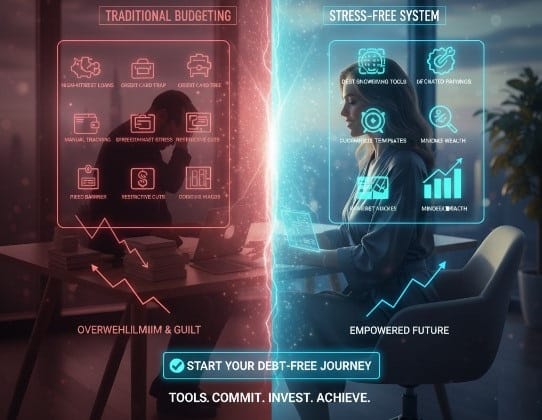
Let’s be honest: when most people hear the word budgeting, they instantly think of restrictions, sacrifices, and spreadsheets that suck the joy out of life. For decades, budgeting has been framed as a painful exercise — cutting out lattes, tracking receipts, or feeling guilty for treating yourself.
But in 2025, budgeting has transformed. With the rise of AI-powered finance apps, customizable digital templates, and psychology-driven methods, managing money can be not only easier but actually enjoyable. Stress-free budgeting doesn’t mean avoiding discipline — it means creating systems that are so intuitive and adaptive, they work with your lifestyle instead of against it.
This guide will walk you through the best tools, templates, and mindset shifts available in 2025 to build a budget that improves your financial health without making you miserable.
Why Stress-Free Budgeting Matters in 2025
Money stress is one of the leading causes of anxiety worldwide. In fact, surveys show that over 60% of Gen Z and Millennials report financial stress as their top life concern. But the irony is: a well-designed budget reduces stress, creates clarity, and gives you freedom.
The challenge? Most people quit budgeting after a few months because the system feels:
- Too complicated.
- Too rigid.
- Too disconnected from real life.
That’s where 2025 innovations come in. Today’s tools are smarter, faster, and emotionally aligned with how people think and spend money.
Step 1: Leverage AI-Powered Budgeting Tools 🤖
The old-school method of manually inputting expenses into Excel is outdated. AI has redefined personal finance by automating the tedious parts.
Top AI tools for 2025:
- Cleo & Copilot Money → Chat-based budgeting assistants that categorize expenses and send fun nudges (“You spent $80 on takeout last week, maybe try cooking at home once?”).
- Monarch Money → AI-powered dashboards that forecast future cash flow and highlight risky spending patterns.
- Bank-native AI tools → Many banks now embed AI budget advisors right inside your account.
👉 Case Example: Daniel, a young professional in London, switched to Copilot Money in 2025. Within three months, he saved $1,200 simply because the app auto-flagged recurring subscriptions he’d forgotten about.
Action Tip: Don’t try every app at once. Pick one, test it for 30 days, and see how much stress it removes.
Step 2: Use Templates That Match Your Lifestyle 📊
Budgeting templates used to be rigid — the same 50/30/20 rule for everyone. But life in 2025 is more complex. Freelancers, side hustlers, digital nomads, and hybrid workers all need flexibility.
Examples of 2025 templates:
- Freelancer Cash Flow Template → Accounts for irregular income and sets aside a “buffer fund.”
- Minimalist Template → Designed for people who want to keep categories to a minimum.
- Family Template → Helps couples split shared expenses fairly while tracking kids’ costs.
- Nomad Template → Adjusts for multi-currency budgeting across countries.
👉 Mini Case Study: Sarah, a digital nomad designer, switched from a fixed 50/30/20 rule to a flexible Notion template that auto-converts currencies. The result? She finally stuck to her budget because it felt tailored to her real life.
Step 3: Psychology Hacks to Make Budgeting Stick 🧠
Here’s the truth: budgeting isn’t really about numbers — it’s about behavior. If you don’t change your money mindset, no app or template will save you. That’s why the best 2025 strategies integrate psychology.
Top psychology hacks:
- Name your goals emotionally – Instead of “Savings Account,” call it Dream Apartment Fund. The brain is wired to respond to emotion.
- Automate the pain – Set auto-transfers to savings or debt repayment. When money moves automatically, you never feel the loss.
- Anchor spending decisions – Before impulse spending, ask: “How many hours of work is this worth?” That pause often changes the decision.
- Micro-rewards – Budgeting should feel rewarding. Treat yourself when you hit small milestones (e.g., under budget for dining out this week).
👉 Example: A study published in 2024 showed that people who labeled their accounts with emotional names (like “Vacation in Bali Fund”) saved 30% more than those who just used generic labels.
Step 4: Keep Flexibility While Staying Accountable ⚖️
The biggest reason budgets fail is because they’re too rigid. Life is unpredictable — a sudden medical bill, a broken laptop, or a job bonus can throw things off.
In 2025, the best approach is “adjust, don’t abandon.”
- If an emergency forces you to overspend one month, rebalance the next.
- If you get a bonus, enjoy 20% guilt-free and save 80%.
- If you miss a goal, analyze why — don’t punish yourself.
Action Tip: Use monthly “budget reviews” instead of daily micromanagement. Stress-free budgeting is about flow, not control.
Step 5: Pair Budgeting with Wealth-Building 🚀
A stress-free budget isn’t just about cutting back — it’s about creating space for growth. Use your budget to fuel:
- Investments in ETFs or fractional shares.
- Retirement contributions.
- Building side hustles or education.
Think of budgeting as the foundation. Once it’s strong, wealth-building becomes easier.
Conclusion — Budgeting as Freedom, Not Restriction ✨
The old budgeting model was about sacrifice. The 2025 budgeting model is about freedom — freedom to enjoy your money while building security. With the right AI tools, personalized templates, and psychology hacks, you can design a system that reduces stress, fits your lifestyle, and grows with you.
🔑 Interactive Question: What’s your biggest budgeting frustration — too many apps, too rigid systems, or emotional burnout? Which 2025 tool or hack would help you the most?