Beyond the Numbers: The Hidden Burden of Student Debt
When we talk about student loans, the focus is usually on the amount owed, repayment strategies, or interest rates.
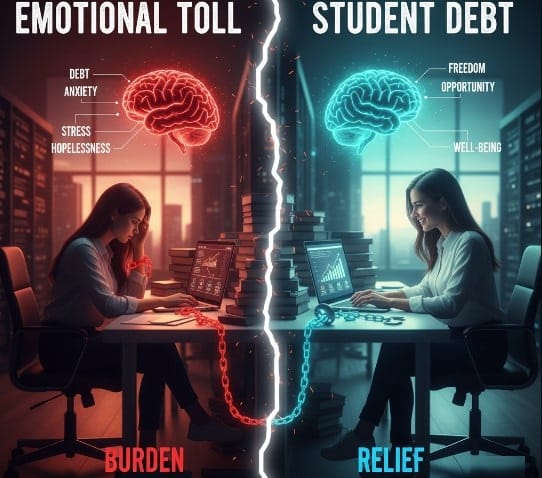
But what rarely gets discussed is the emotional toll—the shame, anxiety, and pressure of carrying debt into adulthood. For many, it feels less like a financial plan and more like a life sentence.
Why Student Debt Feels So Heavy
- Delayed Dreams: Buying a home, starting a family, or traveling feels “on hold.”
- Constant Stress: Every bill is a reminder of what’s owed.
- Shame and Comparison: Seeing peers debt-free can trigger feelings of failure.
- Fear of the Future: Rising interest rates and economic uncertainty amplify worry.
👉 Student debt isn’t just about repayment. It shapes how people see themselves and their future.
The Emotional Side of Student Loans
Anxiety and Stress
The monthly reminder of payments can trigger ongoing stress, affecting sleep, relationships, and even job choices.
Guilt and Shame
Many borrowers feel guilty for taking loans in the first place—even though education is an investment.
Identity Pressure
Some define themselves by their debt, carrying an invisible label: “I’m behind, I’m stuck, I’ll never catch up.”
Decision Fatigue
Every purchase, from coffee to cars, feels loaded with guilt—“Shouldn’t this go toward my loans instead?”
A Story Many Can Relate To
Maya graduated with $35,000 in student loans. Every paycheck, a big portion disappeared toward repayment.
When friends invited her on trips, she declined. She stopped thinking about buying a house. Eventually, she admitted: “It’s not the money—it’s the feeling that I can’t move forward with life.”
Her turning point came when she reframed her debt: instead of seeing it as a punishment, she saw it as the price of opportunity. With a realistic repayment plan and small milestones, she started to regain her sense of control.
Practical Strategies to Manage the Emotional Toll
1. Reframe Your Debt
Instead of “I’m trapped,” think: “This debt gave me access to skills, education, and opportunities.”
2. Celebrate Small Wins
Every $500 or $1,000 paid down is progress. Track it visually—debt charts, apps, or even sticky notes.
3. Set Boundaries Around Comparison
Stop measuring your journey against others. Everyone’s financial timeline is different.
4. Allow Joy Along the Way
Cutting everything out leads to burnout. Budget for small joys—it keeps motivation alive.
5. Seek Support
- Online debt-free communities.
- Talking openly with trusted friends.
- Professional financial counseling if needed.
Looking Ahead: Student Debt in 2025
With rising education costs and shifting economies, student debt stress is unlikely to disappear. But the conversation is changing—mental health is now part of the financial dialogue.
Future success won’t just be about how fast you repay, but how well you protect your mental well-being along the journey.
Conclusion: You Are Not Defined by Your Debt
Student loans may shape your finances, but they don’t define your worth. By reframing your mindset, celebrating small wins, and caring for your emotional health, you can carry the burden without letting it break you.
🔑 Question for You: How has student debt impacted your emotional life—and what small shift could make it feel lighter today?
Light CTA:
If this article resonated, share it with a fellow student or graduate. Sometimes, knowing you’re not alone in this journey makes all the difference.
This for YOU ! : Quick Stress-Relief Rituals for Borrowers