Introduction
Freelancing offers flexibility, autonomy, and the freedom to choose your projects — but it also brings unique challenges. Without clear boundaries, it’s easy to blur the lines between work and personal life, leading to stress, burnout, and decreased productivity.
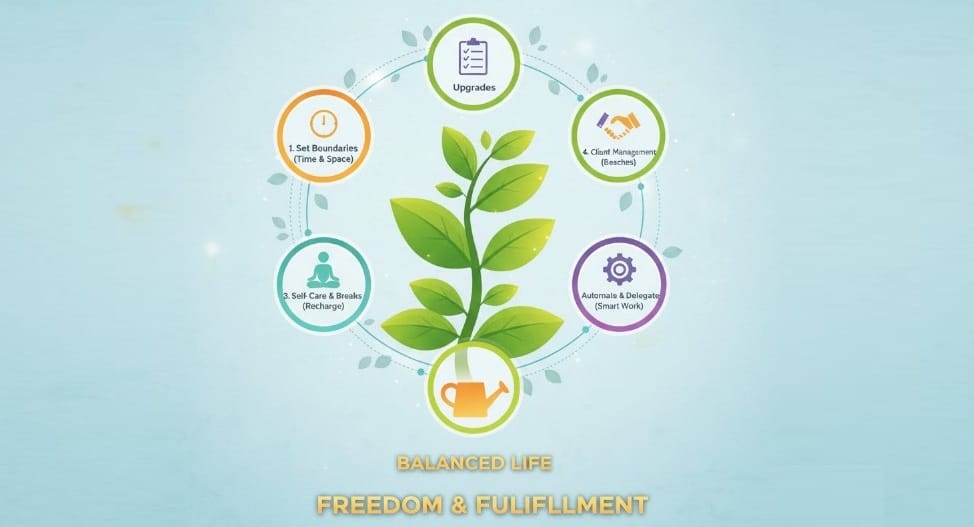
Achieving work-life balance as a freelancer isn’t about working less; it’s about working smarter, setting boundaries, and prioritizing well-being. This guide provides actionable strategies for freelancers to stay productive, protect mental health, and enjoy a fulfilling career.
⚖️ Why Work-Life Balance Matters for Freelancers
- Mental Health: Freelancers often face isolation and irregular work hours. Maintaining balance reduces stress and anxiety.
- Productivity: Structured routines and breaks improve focus and efficiency.
- Sustainable Growth: Overworking may yield short-term gains but leads to burnout and lost opportunities in the long run.
- Relationships: Healthy boundaries allow for personal time, fostering stronger relationships with family and friends.
🕰️ Step 1: Set a Consistent Schedule
- Establish work hours even if your clients are global.
- Use calendar tools to block time for focused work and personal life.
- Schedule breaks and downtime to recharge.
💡 Tip: Treat your freelance work like a traditional job in terms of structure, but retain flexibility for creativity and peak productivity.
📝 Step 2: Prioritize Tasks with Productivity Frameworks
- Use Eisenhower Matrix to distinguish between urgent and important tasks.
- Implement time-blocking techniques for deep work sessions.
- Focus on high-impact projects rather than multitasking.
⚡ Tip: Prioritizing effectively helps prevent overwork and ensures you meet deadlines without sacrificing personal time.
🚪 Step 3: Set Boundaries with Clients
- Communicate your working hours clearly.
- Avoid answering messages or emails outside work hours.
- Consider using automated email responses for off-hours.
💡 Tip: Boundaries build respect and ensure that freelancing doesn’t consume your personal life.
🏡 Step 4: Create a Dedicated Workspace
- Separate home and work environments to mentally switch between roles.
- A well-organized workspace improves focus, efficiency, and reduces stress.
- Avoid working from the bed or couch to prevent blurring personal and professional boundaries.
🧘 Step 5: Prioritize Mental and Physical Health
- Schedule exercise, healthy meals, and relaxation breaks.
- Practice mindfulness, meditation, or journaling to manage stress.
- Avoid overcommitting and learn to say no when necessary.
⚡ Tip: Health is a long-term investment that directly impacts work quality and income potential.
🌐 Step 6: Use Tools to Streamline Work
- Project management tools like Trello, Asana, or Notion for task organization.
- Time-tracking apps like Toggl or Clockify to monitor productivity.
- Automation tools like Zapier or IFTTT to reduce repetitive tasks.
💡 Tip: Leveraging the right tools helps you work smarter, not harder, freeing time for personal life.
🤝 Step 7: Build a Support System
- Network with other freelancers for accountability and advice.
- Join online communities for mental health support and peer guidance.
- Consider mentoring or coaching relationships for career growth without overwork.
📊 Step 8: Monitor and Adjust Regularly
- Reflect weekly on your workload, stress levels, and personal time.
- Adjust schedules, boundaries, and tasks based on what works.
- Recognize signs of burnout early and take preventive action.
💡 Tip: Flexibility is key — work-life balance is dynamic and requires continuous adaptation.
✅ Conclusion
Work-life balance is essential for sustainable success in freelancing. By setting schedules, prioritizing tasks, creating boundaries, focusing on health, and using tools effectively, freelancers can achieve professional growth without sacrificing personal well-being.
Remember, freelancing is a lifestyle — mastering work-life balance ensures that this lifestyle is both rewarding and sustainable.
🚀 Call to Action
- Create a consistent daily and weekly schedule.
- Set boundaries with clients and workspace.
- Prioritize high-impact tasks using productivity frameworks.
- Schedule regular exercise, breaks, and relaxation.
- Use technology to streamline work.
- Build a support system of peers and mentors.
- Reflect and adjust regularly to maintain balance.
By implementing these steps, you can thrive as a freelancer while maintaining a healthy, fulfilling life.