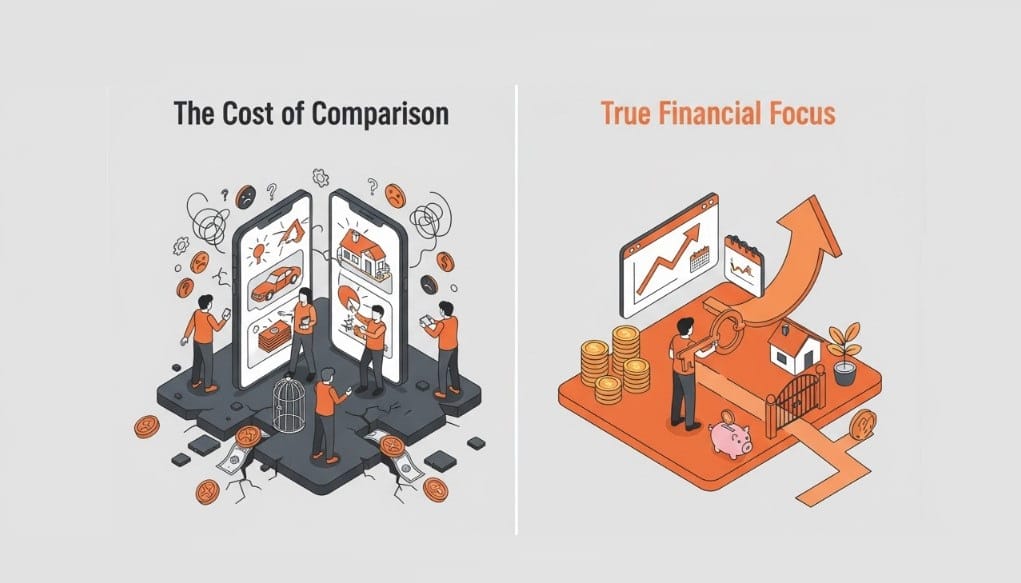
We live in a world where everyone’s financial life seems visible — whether through social media, friends, or colleagues.
It’s tempting to measure your progress against others: their salaries, homes, cars, vacations, or investments.
But constantly comparing finances comes with hidden costs—psychological, emotional, and even financial.
The richest measure of wealth isn’t what others have — it’s what you achieve with clarity and peace of mind.
1. The Psychology of Comparison
Humans are wired for social comparison.
It helps us assess where we stand relative to others — which was useful for survival in small communities.
In modern society, this instinct translates into comparing salaries, homes, and lifestyle markers.
The problem? We rarely see the full picture.
Social media amplifies this, presenting carefully curated highlights, not reality.
2. The Emotional Cost
Financial comparison triggers strong emotions:
- Envy and jealousy — “They have more than me.”
- Shame and guilt — “I’m failing because I’m behind.”
- Anxiety and stress — “I’ll never catch up.”
Chronic exposure to these emotions can:
- Reduce overall happiness
- Increase stress-related health issues
- Create resentment toward friends or family
3. How Comparison Leads to Poor Money Decisions
When we constantly measure ourselves against others, our financial decisions can go off track:
- Overspending to “keep up” with peers
- Impulsive purchases based on lifestyle envy
- Avoiding smart investments out of fear of risk
- Debt accumulation to maintain appearances
Ironically, trying to match others often sets you back financially rather than advancing your wealth.
4. Social Media: The Illusion of Wealth
Platforms like Instagram, TikTok, and YouTube exaggerate the wealth of others.
- Posts show luxury, not debt or stress behind the scenes
- Success is performed, not fully lived
- Constant exposure makes your own financial situation feel inadequate
Comparing reality to someone else’s highlight reel is a recipe for frustration.
5. Hidden Long-Term Costs
Beyond emotions and spending, financial comparison can erode:
- Self-confidence — constant doubt about your financial decisions
- Relationships — jealousy or competitiveness strains friendships and partnerships
- Financial independence — decisions based on external pressure instead of personal goals
The hidden cost isn’t just money lost — it’s your mental and emotional energy.
6. Strategies to Break the Comparison Trap
1. Track Your Own Metrics
Focus on your goals, savings, and progress — not others’ milestones.
2. Practice Gratitude
Recognize what your money already allows you to achieve.
3. Limit Exposure
Reduce time on platforms that trigger unhealthy comparison.
4. Redefine Success
Decide what financial success means for your life, not society’s ideal.
5. Celebrate Small Wins
Even minor progress compounds over time — internal rewards outperform external validation.
7. Building a Healthy Money Mindset
Financial well-being comes from:
- Awareness of your values
- Conscious decision-making
- Emotional resilience
- Measuring progress against yourself, not others
When you stop comparing, you regain clarity, peace, and control over your finances.
Conclusion
Financial comparison is more than a habit — it’s a hidden cost on your wealth and emotional health.
By focusing on your goals, celebrating your wins, and limiting exposure to curated lifestyles, you can build a healthy, sustainable, and empowering relationship with money.
Your wealth is measured not by what others have, but by how well you manage, enjoy, and grow what you have.