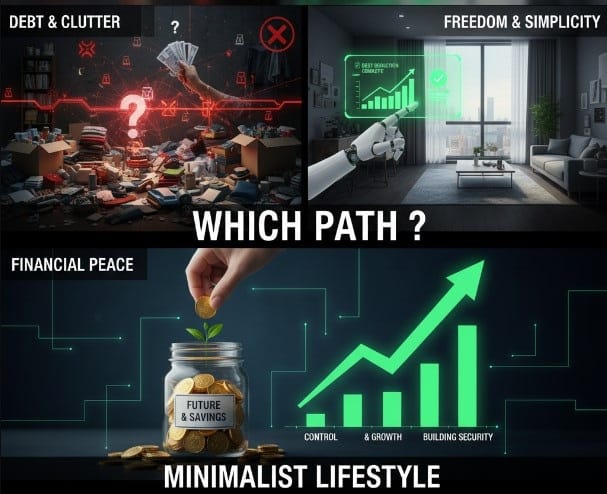
In 2025, many people are seeking ways to reduce debt and regain financial freedom. One lifestyle approach gaining popularity is minimalism, which emphasizes intentional living, reducing clutter, and prioritizing value over consumption. Beyond aesthetics, minimalism can have a profound impact on your financial habits and debt reduction efforts.
This article explores how adopting minimalism can help you spend less, save more, and eliminate debt faster.
What Is Minimalism?
Minimalism is the intentional practice of simplifying life by:
- Reducing unnecessary possessions
- Prioritizing meaningful experiences over material goods
- Eliminating distractions and clutter
At its core, minimalism is about aligning spending with values, which naturally discourages overspending and encourages saving.
Case Study: Minimalism Reduces Debt
Meet Clara, a 28-year-old graphic designer:
- Clara was $15,000 in credit card debt due to impulsive shopping and lifestyle inflation.
- She adopted a minimalist lifestyle: decluttered her home, limited purchases to essentials, and tracked every expense.
- She redirected the money saved from unnecessary spending to pay off high-interest debt.
Result: Clara became debt-free in just 18 months and reported feeling less stressed and more in control of her finances.
How Minimalism Affects Spending Behavior
- Reduces Impulse Purchases
- Fewer distractions and a focus on essentials curb unnecessary spending.
- Encourages Mindful Consumption
- Minimalists consider the long-term value of each purchase.
- Increases Savings Potential
- Money saved from reducing purchases can be used to pay off debt or invest.
- Improves Financial Clarity
- Less clutter allows better visibility of income, expenses, and debt obligations.
Step 1: Assess Your Spending
- Track all expenses for at least a month using apps like YNAB, Mint, or PocketGuard.
- Identify areas where spending does not align with your values.
Step 2: Declutter and Sell Unused Items
- Sell items you no longer need on platforms like eBay, Facebook Marketplace, or Poshmark.
- Use the proceeds to pay down high-interest debt.
Step 3: Adopt a Minimalist Mindset
- Before buying, ask: “Do I truly need this?”
- Focus on quality over quantity to prevent frequent purchases.
- Avoid lifestyle inflation when income increases; stick to essential spending.
Step 4: Automate Savings and Debt Repayment
- Use automated transfers to savings or debt accounts.
- Minimalism reduces discretionary spending, freeing up more money for consistent debt payments.
Bonus Tips
- Digital Minimalism – Reduce subscription services and streaming apps you don’t use.
- Experience Over Things – Spend on meaningful experiences, not material goods.
- Mindful Gift-Giving – Give practical or experience-based gifts to reduce financial strain.
- Track Progress – Celebrate milestones in debt repayment to stay motivated.
Conclusion
Minimalism is more than just decluttering—it’s a powerful financial strategy. By simplifying life, reducing unnecessary spending, and focusing on intentional consumption, minimalists can accelerate debt repayment, save money, and achieve financial freedom.
🔑 Interactive Question for Readers:
Have you tried minimalism to reduce debt or save money? How has it changed your spending habits? Share your experience below!