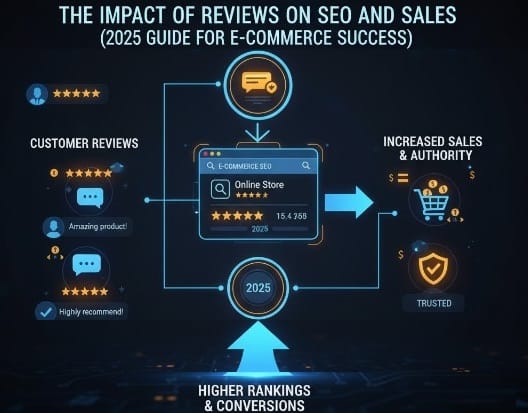
Introduction: Why Reviews Are the Digital Currency of Trust
When was the last time you bought something online without checking reviews? Probably never.
In today’s e-commerce landscape, customer reviews are more than social proof — they’re powerful SEO fuel and sales drivers.
In 2025, Google values authenticity, relevance, and user experience more than ever. And nothing signals that better than real customer feedback.
Let’s explore how reviews impact both your search rankings and conversion rates, and how you can turn them into your store’s secret weapon.
1. How Reviews Improve SEO (Search Engine Optimization)
Reviews help Google understand your business better. Here’s how:
a. Fresh, User-Generated Content
Every new review adds fresh content to your site — which Google loves.
Search engines reward websites that are regularly updated with relevant text.
Example:
A skincare brand that encouraged 20+ reviews per week noticed its product pages climb to page 1 of Google within 2 months, thanks to consistent new keyword-rich content.
b. Keyword Enrichment
Customers naturally use long-tail keywords in their reviews, like:
“Best organic moisturizer for sensitive skin!”
This helps your page rank for terms you may not have even targeted.
c. Rich Snippets and Star Ratings
When your reviews are marked up with schema (structured data), Google can display star ratings, pricing, and review counts directly in search results — dramatically boosting click-through rates (CTR).
Pro Tip:
Pages with star ratings in search results can see up to a 35% increase in CTR.
d. Increased Dwell Time and Lower Bounce Rates
Customers spend more time reading reviews — sending strong engagement signals to Google that your content is useful.
2. How Reviews Drive Sales and Conversions
SEO brings visitors. Reviews turn them into buyers.
a. Trust = Conversions
88% of online shoppers say they trust online reviews as much as personal recommendations.
When visitors see real experiences from other buyers, they feel safer completing the purchase.
b. The Power of Social Proof
Humans are social creatures — we follow the crowd.
If 500 people say a product is great, chances are new visitors will buy it too.
Example:
A tech accessories store highlighted its “Top Rated” section on the homepage — sales of those products jumped 60% in one month.
c. Higher Average Order Value (AOV)
Customers often spend more when they see positive reviews and confidence in the brand.
Pro Tip:
Showcase reviews not just on product pages — but on the homepage, checkout page, and marketing emails.
3. Where to Collect and Display Reviews
a. On Your Product Pages
This is where potential buyers make the final decision. Display overall ratings, detailed reviews, and customer photos.
b. On Google (via Google Business Profile)
For brands with physical locations or hybrid models, Google reviews improve local SEO visibility.
c. On Third-Party Platforms
Sites like Trustpilot, Yelp, or Amazon help you build credibility and collect independent feedback.
Pro Tip:
Integrate your store with review collection tools like Loox, Judge.me, Yotpo, or Trustpilot to automate the process.
4. How to Encourage Customers to Leave Reviews
a. Ask at the Right Time
Send a review request email 3–7 days after product delivery, when the excitement is still high.
b. Offer Incentives (Ethically)
Discount codes or loyalty points can encourage feedback — just ensure you’re not buying reviews.
c. Simplify the Process
Make leaving a review as easy as clicking one link. No account creation, no long forms.
d. Respond to Every Review
Replying shows customers that your brand listens — and Google values that engagement.
Example:
A fashion retailer who replied to every review — positive or negative — saw customer retention increase by 22%.
5. Handling Negative Reviews Gracefully
No business gets only 5-star ratings. What matters is how you respond.
a. Stay Calm and Professional
A polite, solution-focused response can turn a critic into a loyal customer.
b. Learn from Feedback
Use recurring complaints as insights to improve your product or service.
c. Never Delete Legitimate Reviews
Transparency builds long-term trust. Shoppers prefer a mix of good and bad reviews — it feels authentic.
Pro Tip:
A few 4-star reviews can actually increase credibility, while only perfect scores can look suspicious.
6. Technical SEO: Structured Data for Reviews
To help Google understand and display your reviews correctly, use schema markup:
<script type="application/ld+json">
{
  "@context": "https://schema.org/",
  "@type": "Product",
  "name": "Organic Cotton T-Shirt",
  "aggregateRating": {
    "@type": "AggregateRating",
    "ratingValue": "4.7",
    "reviewCount": "132"
  }
}
</script>
Pro Tip:
Validate your structured data using Google’s Rich Results Test.
7. Using Reviews in Marketing & Retargeting
a. Social Proof in Ads
Add review snippets in Facebook or Google Ads:
“Rated 4.9★ by 2,000+ happy customers.”
b. Email Campaigns
Send “Top Reviewed Products” newsletters — these tend to get higher open and click rates.
c. On Social Media
Repost authentic customer reviews or video testimonials to drive trust and engagement.
Example:
A DTC beauty brand reposted customer TikTok reviews and saw website traffic double in a week.
8. The Future of Reviews in 2025 & Beyond
Expect more AI-driven review analysis, where platforms automatically detect authenticity and sentiment.
Video reviews and voice-based testimonials will also become mainstream.
Insight:
By 2026, 70% of e-commerce customers will rely on user-generated video reviews before buying.
Conclusion: Reviews Are the Bridge Between SEO and Sales
Customer reviews are no longer optional — they are the heartbeat of your e-commerce strategy.
They build credibility, improve visibility, and create emotional trust that no ad can replicate.
The best part? You already have the resource — your customers.
🔑 Interactive Question:
What’s your next step — will you focus on collecting more reviews or showcasing them more effectively?
CTA:
Start today: send one review request email, reply to a customer’s feedback, or add schema markup.
Small steps toward authentic engagement can turn into massive SEO and sales gains.