Introduction
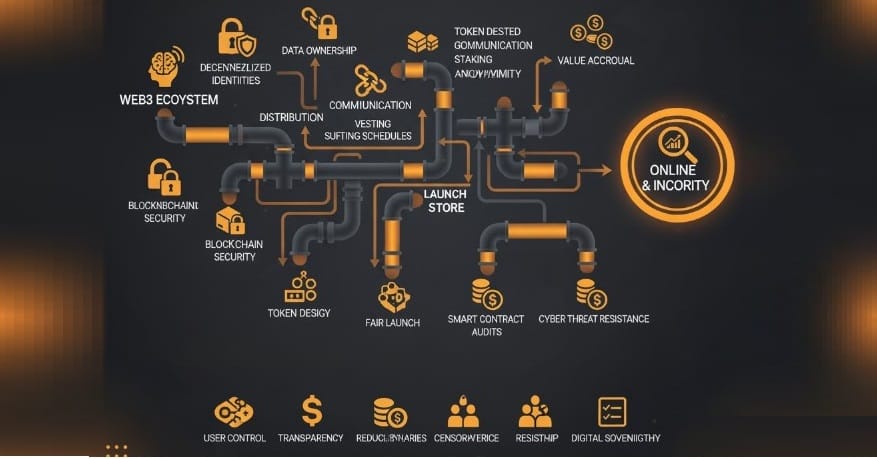
The rise of Web3—the next evolution of the internet—promises a decentralized digital ecosystem where users have more control over their data. Unlike Web2, dominated by centralized platforms that monetize personal information, Web3 leverages blockchain and cryptography to enhance privacy, security, and user ownership.
Understanding Web3’s impact on data privacy and security is crucial for developers, investors, and everyday internet users navigating this new digital frontier.
1. What is Web3?
Web3 is the decentralized internet, powered by blockchain technology, cryptocurrencies, and decentralized applications (dApps).
Key Features:
- Decentralization: No single entity controls data or applications.
- User Ownership: Individuals own their identity, assets, and personal data.
- Transparency: Blockchain records are immutable and verifiable.
- Tokenization: Incentivizes participation and secure network behavior.
💡 Example: In Web3, social media platforms can exist as decentralized networks where users retain full control over their posts, interactions, and personal information.
2. Web3 and Data Privacy
Web3 fundamentally changes how personal data is handled:
A. User Control Over Data
- Users store data in personal wallets or decentralized storage systems.
- Third-party platforms cannot access or monetize personal information without consent.
B. Privacy-Preserving Technologies
- Zero-Knowledge Proofs (ZKPs): Allow verification without revealing sensitive information.
- Self-Sovereign Identity (SSI): Users maintain their digital identity securely across multiple platforms.
C. Data Minimization
- Only essential data is shared for transactions or services.
- Reduces exposure to hacks and data breaches common in centralized systems.
⚡ Pro Tip: Web3 applications encourage privacy-by-design, meaning privacy is built into the system from the start, not added later.
3. Web3 and Security
Blockchain and cryptography enhance security in several ways:
A. Immutable Records
Transactions and smart contracts on a blockchain are tamper-proof, preventing unauthorized changes.
B. Decentralized Architecture
No single point of failure reduces the risk of server hacks and data leaks.
C. Cryptographic Protection
- Public-private key cryptography ensures that only users with the correct keys can access or authorize transactions.
- Multi-signature wallets add an extra layer of security for digital assets.
D. Smart Contract Vulnerabilities
While smart contracts offer automation and trustless operations, coding errors or exploits can pose risks.
💡 Tip: Always audit smart contracts and use verified dApps to mitigate security risks.
4. The Role of NFTs and Tokenization in Privacy
Non-Fungible Tokens (NFTs) and tokenized assets introduce new considerations:
- NFTs can store metadata or proof of ownership without revealing personal information.
- Token-gated access ensures that only verified holders can access certain digital content.
- Blockchain’s transparency must be balanced with privacy to avoid leaking sensitive metadata.
5. Challenges and Limitations
While Web3 enhances privacy and security, challenges remain:
- User Responsibility: Users control private keys; losing them can mean losing access permanently.
- Scalability vs. Privacy: Privacy-focused blockchains may face slower transaction speeds.
- Regulatory Uncertainty: Laws around decentralized data and privacy vary globally.
- Education Gap: Many users are unfamiliar with how to safely manage keys, wallets, and dApps.
6. Best Practices for Secure Web3 Usage
- Use hardware wallets for storing crypto and NFTs.
- Verify dApp authenticity before connecting wallets.
- Enable multi-factor authentication where possible.
- Stay informed about emerging privacy and security tools in Web3.
- Educate yourself on decentralized identity and data management principles.
7. Future of Web3 Privacy and Security
- Interoperable Privacy Protocols: Cross-chain solutions preserving privacy while enabling transactions.
- Decentralized Identity Standards: Universal SSI frameworks for secure authentication.
- Enhanced Cryptography: Next-gen ZKPs and encryption methods improving privacy without sacrificing transparency.
- Regulatory Alignment: Global frameworks may emerge to balance decentralization with legal compliance.
💬 Insight: Web3 is shifting the internet from platform-owned data to user-owned data, redefining privacy and security paradigms.
8. Final Thoughts
Web3 has the potential to transform data privacy and security by decentralizing control, leveraging cryptography, and giving users ownership of their digital lives.
Secure your keys, choose verified platforms, and embrace the decentralized future.
As Web3 matures, privacy and security will no longer be optional—they will be fundamental pillars of the internet.