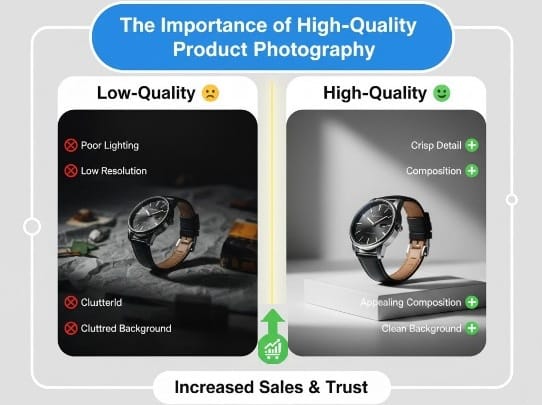
Introduction: Why Product Photography Can Make or Break Your Sales
In e-commerce, your product images are your first impression — and often your only chance to convince a customer to buy.
Unlike physical stores, online shoppers cannot touch, feel, or try your products. They rely on visual cues to assess quality, trustworthiness, and value. Poor images can make a product look cheap, confusing, or even fake — and no amount of copy can fully fix that.
High-quality product photography, on the other hand, builds credibility, trust, and desire, directly impacting your conversion rates.
In this guide, we’ll explore why great product photography matters and how you can achieve it, even on a budget.
1. First Impressions Count
Your images are often the first thing a visitor notices.
- Crisp, professional photos make your product appear high-quality
- Blurry or low-resolution images can drive visitors away immediately
Example:
A small jewelry brand upgraded from smartphone photos to clean, well-lit shots and saw a 30% increase in conversions in just two months.
Pro Tip: Invest in a simple lightbox or natural daylight setup — it’s cheaper than you think and dramatically improves quality.
2. Builds Trust and Credibility
High-quality images signal professionalism and reliability.
- Shoppers trust products that look real and well-presented
- Multiple angles show transparency
- Lifestyle images demonstrate real-world use
Example:
A sustainable home goods store showcased bamboo kitchenware in kitchen setups. Customers could visualize the product in their own homes, increasing purchase confidence.
Pro Tip: Include both studio-style images and lifestyle shots for maximum effect.
3. Highlights Features and Details
Images can communicate product features faster than text:
- Close-ups show material quality
- Angles show size, shape, or design
- Interactive or 360° images allow customers to explore
Example:
A sneaker brand used rotating 360° images, allowing users to inspect stitching, sole, and color — reducing returns and increasing satisfaction.
Pro Tip: Zoom functionality is essential — allow customers to inspect fine details.
4. Supports Brand Storytelling
Your visuals are part of your brand identity. Consistent photography style reinforces your brand personality.
- Colors, lighting, and composition reflect brand values
- Lifestyle photos tell a story about how the product fits into customers’ lives
Example:
A small skincare brand uses soft pastel backgrounds and natural lighting to communicate calmness, purity, and simplicity — aligning perfectly with its brand message.
Pro Tip: Create a visual style guide to maintain consistency across product images and social media.
5. Improves SEO and Online Visibility
Product images aren’t just for conversions — they also help search engines understand your product:
- Properly named image files and alt text improve SEO
- High-quality images are more likely to appear in Google Image searches
Pro Tip: Include descriptive filenames like organic-cotton-tote-bag.jpg and use alt text that includes relevant keywords naturally.
6. Reduces Returns and Customer Complaints
Accurate, clear images reduce the chance of returns:
- Customers know exactly what they’re buying
- Fewer surprises in color, size, or style
Example:
An apparel brand added detailed size guides and close-up fabric shots. Return rates dropped by 20%, saving both time and money.
Pro Tip: Show the product on a model with different body types, or provide size comparison charts.
7. Tips for Achieving High-Quality Product Photography on a Budget
You don’t need a professional studio to create effective product images:
💡 DIY Tips:
- Natural Lighting: Shoot near windows or outdoors for soft, flattering light.
- White Backgrounds: Use a clean sheet, foam board, or lightbox.
- Smartphone Cameras: Modern phones can take professional-looking photos with proper setup.
- Photo Editing: Free tools like Canva, Snapseed, or GIMP can enhance color and brightness.
- Consistency: Keep angles, lighting, and background uniform across all products.
Pro Tip: Even small improvements — better lighting, a steady tripod, or consistent backgrounds — can boost perceived value dramatically.
8. Incorporate Video and 360° Views
In 2025, static images alone may not be enough. Videos and interactive views provide:
- Real-life product context
- Better understanding of size, texture, and usability
- Higher engagement and longer time spent on page
Example:
A kitchen gadget brand added short demo videos. Conversion rates jumped by 25%, and customer satisfaction improved as shoppers understood exactly how to use the product.
Conclusion: Your Images Are Your Silent Salesperson
High-quality product photography is one of the most cost-effective ways to increase e-commerce sales.
From first impressions to SEO, from trust-building to reducing returns, professional visuals have a direct impact on your bottom line.
Investing time and effort into your product photography isn’t optional — it’s essential for e-commerce success in 2025.
🔑 Interactive Question: Which product on your store could benefit most from upgraded images — and what’s your first step to improve it?
CTA: Take 30 minutes this week to re-shoot or enhance one product with better lighting, angles, or lifestyle context. One high-quality photo can pay for itself in conversions.