The “No Kings” Protest Movement: What It Means and Why It’s Spreading Across U.S. Cities
Introduction
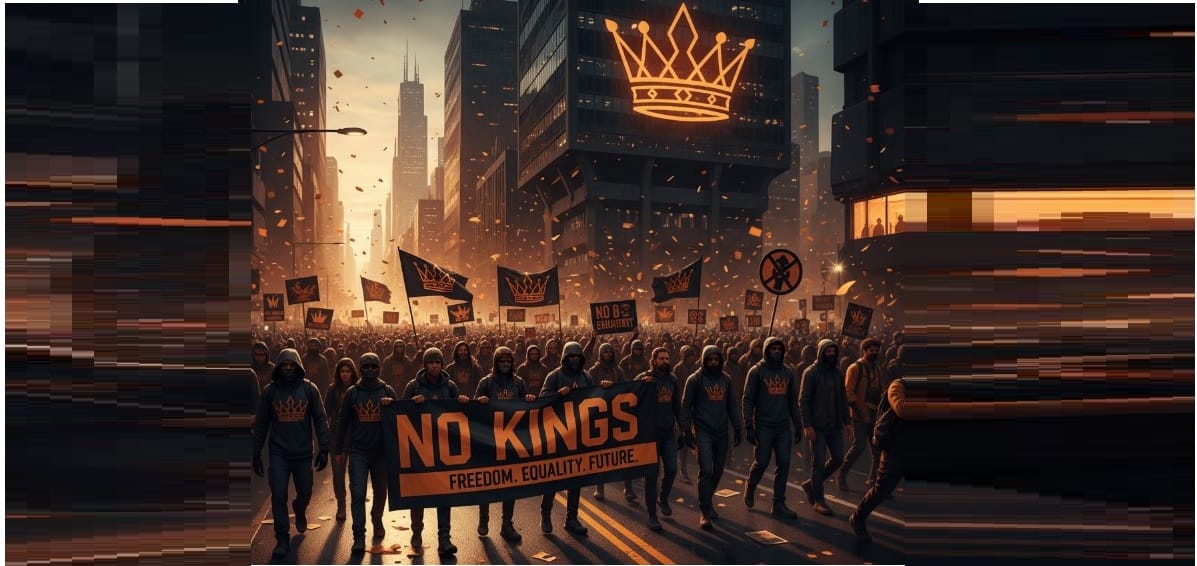
Across the United States, a wave of demonstrations known as the “No Kings” protests has been making headlines in 2025. From New York to Portland, Chicago to Seattle, thousands have taken to the streets carrying signs reading “No Kings, No Masters” and “Democracy for All.”
But what exactly does “No Kings” mean? And why has this slogan—simple yet powerful—captured the spirit of so many Americans?
Let’s dive deep into the origins, symbolism, and growing influence of the No Kings movement.
What Is the “No Kings” Protest?
The “No Kings” movement is a grassroots protest campaign that emphasizes democracy, equality, and resistance to authoritarianism. The slogan “No Kings” represents a rejection of unchecked power—whether political, corporate, or institutional.
While not tied to a single political party, many participants see it as a stand against concentrated power, the erosion of democratic norms, and rising inequality. The message: no one should rule above the people.
The phrase draws inspiration from America’s revolutionary roots, echoing the same anti-monarchist spirit that sparked the founding of the nation.
Origins and Evolution
The slogan “No Kings” began circulating online in early 2024 through social media discussions about government accountability and corporate influence in politics. Activist groups and civic organizations soon adopted it as a rallying cry for transparency, freedom of speech, and equal representation.
By mid-2025, “No Kings” protests began appearing in major cities including:
- Portland, OR
- New York City
- Chicago, IL
- Seattle, WA
- Washington, D.C.
- Philadelphia, PA
- Atlanta, GA
- Denver, CO
These demonstrations often coincide with “No Kings Day” rallies, public marches advocating for democracy, voter rights, and resistance to centralized power structures.
What Does “No Kings” Mean?
At its core, “No Kings” symbolizes the refusal to be ruled or dominated by any individual or system. It’s about collective empowerment, demanding accountability from leaders and rejecting systems that place elites above citizens.
The phrase has been interpreted in multiple ways:
- Political meaning: Standing against authoritarian tendencies and threats to democratic institutions.
- Social meaning: Challenging hierarchies, privilege, and systemic injustice.
- Cultural meaning: A call for equality, dignity, and shared responsibility.
As one protester in Boston put it:
“No Kings isn’t about chaos. It’s about reminding everyone that power belongs to the people—not the few.”
Key Themes Behind the Movement
- Democracy and Representation
Protesters demand stronger democratic accountability, fair elections, and policies that reflect the will of the people. - Economic Equality
Many demonstrators connect No Kings with calls for reducing corporate influence and wealth disparity. - Social Justice
The movement aligns with broader issues like racial equity, gender equality, and freedom of expression. - Digital Freedom
Some protests also highlight surveillance, censorship, and the power of tech giants—arguing that digital monopolies have become “modern kings.”
Where Are the Protests Happening?
The “No Kings” protests have appeared in dozens of U.S. cities throughout 2025. Among the largest turnouts were:
- New York City: Thousands marched through downtown Manhattan.
- Portland, Oregon: Known for its strong activist base, Portland hosted one of the earliest No Kings rallies.
- Chicago: Protesters gathered at Daley Plaza demanding government transparency.
- Washington, D.C.: A symbolic protest took place near Capitol Hill under the banner “No Kings in a Democracy.”
Local chapters of organizations like Indivisible and Democracy Now have also joined forces with independent groups to organize rallies and marches.
The Symbolism of “No Kings” Signs and Art
Protest art has become a defining feature of the movement. Common slogans include:
- “No Kings. No Masters.”
- “We the People.”
- “Democracy Is Not for Sale.”
- “Power to the Voters.”
Artists across the U.S. have incorporated No Kings imagery into murals, posters, and digital art, spreading the message far beyond city streets.
Criticism and Misunderstandings
As with any large social movement, “No Kings” has faced criticism and misrepresentation. Some detractors claim it’s anti-government or anarchist, while supporters argue it’s pro-democracy and pro-accountability.
Political analysts note that the movement’s decentralized structure makes it difficult to categorize—it’s a people’s movement, not a partisan one.
The Future of the “No Kings” Movement
With protests continuing into late 2025, it’s clear that No Kings has become more than a slogan—it’s a symbol of civic awakening.
Organizers plan to expand into educational initiatives, voter awareness campaigns, and digital activism throughout 2026, emphasizing that democracy requires ongoing participation, not passive consent.
As the movement grows, one message remains constant:
“No Kings. No rulers. Just a government of, by, and for the people.”
Conclusion
The No Kings protest movement represents a new chapter in American civic activism—one that rejects dominance and demands transparency, equality, and shared power.
Whether you see it as a political statement, a democratic reminder, or a social awakening, the movement’s impact is undeniable. In an age where power can easily concentrate in few hands, “No Kings” stands as both a warning and a hope: that the people, not the powerful, remain the heart of democracy.