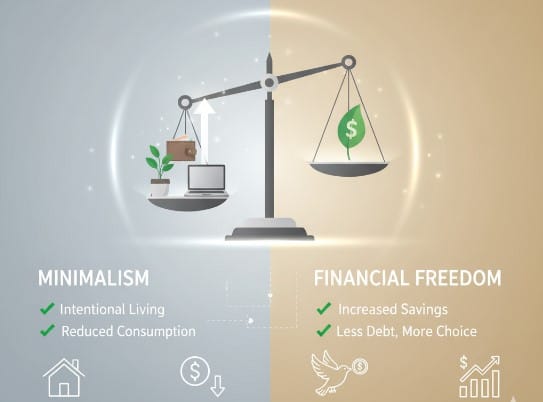
In a world that constantly pushes us to buy more, upgrade often, and chase the next trend, minimalism offers a refreshing alternative. But minimalism isn’t just about decluttering closets or living in a tiny house—it can also play a powerful role in helping you achieve financial freedom.
In this article, we’ll explore how adopting a minimalist lifestyle impacts your spending, savings, and mindset, ultimately creating the space and discipline needed for long-term wealth.
What is Minimalism, Really?
Minimalism is often misunderstood as living with as few possessions as possible. In reality, it’s about intentional living—focusing only on the things, experiences, and relationships that truly add value to your life.
By stripping away excess, minimalists free themselves from consumer pressure and discover financial clarity.
How Minimalism Supports Financial Freedom
1. Spending Less by Reducing Impulse Purchases 🛒
Minimalism teaches you to question every purchase. Instead of chasing instant gratification, you focus on whether something aligns with your values and needs. This naturally cuts down on overspending.
2. Creating More Savings Without Sacrifice 💰
When you spend less, you save more. Minimalists often find they can build an emergency fund, invest, or pay down debt faster simply by cutting unnecessary expenses.
3. Reducing Debt Through Mindful Choices 🧾
Minimalism curbs lifestyle inflation—the tendency to spend more as income grows. By resisting the urge to upgrade, you avoid debt traps and stay in control of your finances.
4. Prioritizing Experiences Over Things 🌍
Studies show experiences bring more happiness than material goods. Minimalists redirect spending toward travel, hobbies, or personal growth—investments that create lasting fulfillment instead of clutter.
5. Boosting Mental Clarity and Financial Discipline 🧘
A decluttered space often leads to a decluttered mind. With less distraction, minimalists make smarter financial decisions and set clearer long-term goals.
Minimalism in Action: Practical Steps
- Audit Your Spending – Review where your money goes each month. Identify subscriptions, habits, or purchases that don’t align with your values.
- Adopt the “One In, One Out” Rule – For every new item you buy, donate or sell another.
- Set Minimalist Financial Goals – Focus on financial milestones (like debt-free living or early retirement) instead of keeping up with peers.
- Simplify Banking and Budgeting – Use fewer credit cards and a minimalist budgeting app to avoid overwhelm.
- Choose Quality Over Quantity – Minimalists often spend more upfront on durable items, saving money over time.
Case Study: Minimalism as a Path to Financial Independence
- Sarah’s Story: A 32-year-old software engineer reduced her monthly spending by $1,000 by downsizing her apartment, selling unused clothes, and cutting subscription services. Within three years, she eliminated $20,000 of debt and built an investment portfolio—unlocking financial independence years earlier than expected.
The Psychological Link Between Minimalism & Money
Minimalism is more than a financial tactic—it reshapes your relationship with money. Instead of money being a source of stress or status, it becomes a tool for freedom.
By living with less, you stop letting money control your choices. This shift makes financial freedom not only possible but sustainable.
Conclusion
Minimalism and financial freedom go hand in hand. By eliminating clutter and focusing on what truly matters, you gain the discipline, clarity, and financial leverage needed to build a future free from debt and full of choice.
It’s not about living with less—it’s about living better.