Introduction
While NFTs initially gained fame as digital art and collectibles, 2025 marks the rise of utility NFTs, expanding their applications into real-world services, memberships, gaming, and tokenized access. Utility NFTs go beyond being digital collectibles—they provide tangible value and functionality to holders.
This evolution is redefining how NFTs are perceived, creating practical use cases for businesses, communities, and consumers worldwide.
1. What Are Utility NFTs?
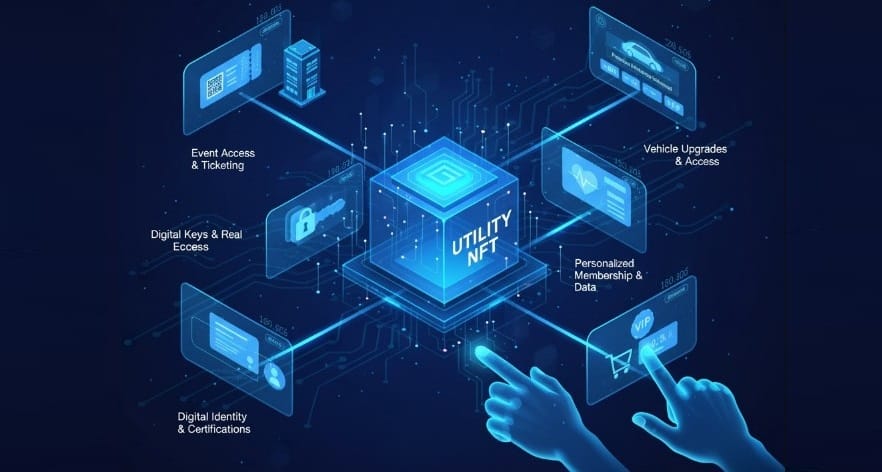
Utility NFTs are non-fungible tokens that provide specific benefits, privileges, or access to real-world or digital services. Unlike traditional art NFTs, utility NFTs deliver value beyond ownership, often serving as tickets, memberships, or proof of entitlement.
Examples include:
- Access to exclusive events, products, or experiences
- Memberships in communities or platforms
- In-game benefits such as rare items or characters
- Voting or governance rights in decentralized platforms
2. Utility NFTs in 2025: Key Use Cases
a) Event Access and Memberships
Utility NFTs are increasingly used as digital passes for concerts, conferences, and VIP experiences.
- NFT holders can gain exclusive entry or perks unavailable to non-holders.
- Example: Music festivals and gaming conventions issue NFT tickets with additional fan rewards.
b) Gaming and Play-to-Earn Integration
Gaming continues to be a major driver for utility NFTs.
- NFTs provide special abilities, rare items, or access to events within games.
- Players can trade utility NFTs, creating new economic opportunities in play-to-earn ecosystems.
c) Tokenized Real-World Assets and Services
Utility NFTs can represent ownership or access rights to physical assets or services:
- Fractionalized property ownership
- Exclusive retail products
- VIP services or subscriptions
By linking blockchain tokens to tangible value, these NFTs create liquidity and tradable rights for assets that were previously illiquid.
d) Decentralized Finance (DeFi) and Governance
Utility NFTs can act as governance tokens, giving holders voting power in decentralized platforms.
- NFT holders can influence decisions on project development, funding, or community rules.
- This adds real-world agency to digital token ownership, aligning incentives between users and platforms.
3. Benefits of Utility NFTs
- Real-World Value: Holders receive tangible benefits or access.
- Enhanced Engagement: Brands and communities can foster loyalty with NFT rewards.
- Tradable Access: Utility NFTs can be sold or transferred, providing liquidity for digital and physical services.
- Innovative Monetization: Companies can monetize memberships, perks, and experiences through NFTs.
- Blockchain Transparency: Ownership and entitlement are verified on-chain, reducing fraud and enhancing trust.
4. Challenges and Considerations
Despite their potential, utility NFTs face obstacles:
- Regulatory Uncertainty: Legal frameworks for digital rights, memberships, and tokenized assets are still evolving.
- Over-Speculation: NFTs with perceived “utility” may be traded for profit rather than actual usage.
- Technical Barriers: Users must manage wallets, private keys, and blockchain interactions securely.
- Adoption Hurdles: Businesses need to educate users on the tangible value of NFT utility.
Success requires combining innovative NFT design with practical use cases and user education.
5. The Future of Utility NFTs
By 2025, utility NFTs are expected to grow into a mainstream tool for brands, gaming platforms, and decentralized ecosystems:
- Corporate Adoption: Businesses may issue NFTs as loyalty tokens or employee incentives.
- Cross-Platform Integration: NFTs could unlock benefits across multiple games, apps, or virtual worlds.
- Hybrid Physical-Digital Experiences: NFTs may bridge real-world products, exclusive events, and digital engagement.
- Governance and Decentralization: Communities will increasingly rely on NFTs to enforce transparent, user-driven decision-making.
The evolution of utility NFTs signals a shift from speculative collectibles to functional, value-driven digital assets.
Conclusion
The rise of utility NFTs in 2025 demonstrates that NFTs are no longer confined to art and collectibles. By offering real-world benefits, digital access, and governance rights, utility NFTs are redefining ownership, engagement, and monetization.
For businesses, gamers, and communities, utility NFTs provide innovative ways to reward loyalty, enhance experiences, and create tradable digital rights, making them a cornerstone of the next phase of the NFT ecosystem.
References & Further Reading
- Ethereum NFTs Overview
- OpenSea Utility NFT Examples
- NFT Ticketing and Membership
- Utility NFTs in Gaming