We live in a world that worships wealth.
From luxury lifestyles on social media to productivity culture’s constant grind, we’re surrounded by one core message:
“More money equals more happiness.”
It’s seductive—and dangerous.
Because when happiness is tied to money, enough never feels like enough.
This belief doesn’t just affect our finances—it quietly shapes our identity, relationships, and mental health.
1. The Illusion of Financial Fulfillment
It’s natural to want more. Money provides comfort, security, and opportunity. But the problem begins when money becomes the measure of meaning.
At first, financial improvement does bring satisfaction: paying off debt, moving to a safer neighborhood, or being able to say “yes” to experiences you once couldn’t afford.
Yet studies in behavioral economics show that beyond a certain threshold, more money stops increasing happiness—it only amplifies anxiety, competition, and comparison.
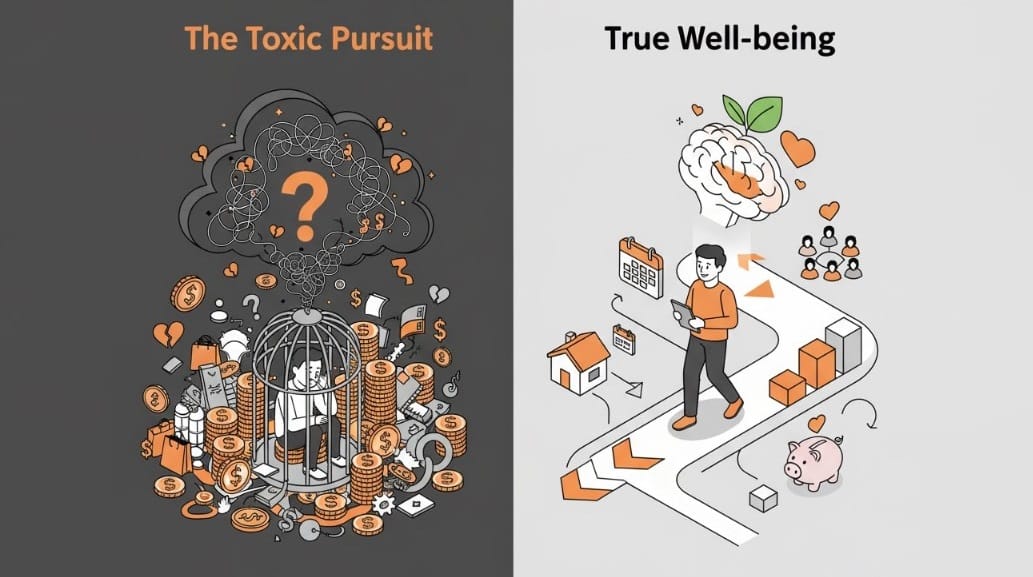
We think we’re chasing freedom.
But often, we’re just upgrading our cages.
2. The “When-I-Have” Syndrome
Most people don’t realize how deeply this belief is embedded in their thinking.
It sounds like:
- “When I make six figures, I’ll finally relax.”
- “Once I buy my dream home, I’ll feel successful.”
- “When I have enough saved, I’ll be confident.”
This is called the “When-I-Have” fallacy—the illusion that happiness exists after an external milestone.
But emotional well-being doesn’t respond to bank balances. It responds to internal alignment—purpose, belonging, and peace.
If you can’t access joy or gratitude with what you have now, no amount of money will fill that void.
3. The Psychology Behind the Belief
At its core, the “money = happiness” belief is emotional, not logical.
It’s rooted in deeper psychological associations:
- Safety: “Money means I won’t be abandoned or powerless.”
- Worth: “My income reflects my value.”
- Control: “If I earn more, I can finally relax.”
- Identity: “Success proves I’m good enough.”
Money becomes a proxy for emotional security—a way to control uncertainty, soothe fear, or prove worth.
But external validation is fleeting.
The moment the goal is reached, the bar moves higher.
4. The Hedonic Treadmill: Why “Enough” Keeps Shifting
Humans are wired for adaptation. When we reach new levels of comfort or wealth, we quickly adjust and crave more.
This phenomenon is called the hedonic treadmill:
- You get a raise → happiness spikes briefly → then normalizes.
- You buy something new → excitement fades → you need another hit.
Instead of satisfaction, you experience perpetual striving.
You’re moving faster, but never arriving.
The problem isn’t wanting more.
It’s believing “more” is the only path to happiness.
5. How This Belief Damages Emotional Health
When money becomes a stand-in for happiness, it reshapes your identity around productivity, performance, and status.
The results are toxic:
- Chronic anxiety: Fear of losing progress or “falling behind.”
- Burnout: Working beyond healthy limits to maintain an image.
- Shame: Feeling inadequate when comparing yourself to others.
- Isolation: Valuing success over connection.
You stop asking “What fulfills me?” and start asking “What pays the most?”
The cost of chasing financial happiness is often emotional bankruptcy.
6. The Happiness Equation: Money + Meaning
Psychologists have found that money contributes to happiness only when it supports your values, not when it replaces them.
For example:
- Spending on experiences (travel, connection, learning) increases well-being.
- Spending on status symbols (cars, luxury items) leads to temporary highs and long-term emptiness.
- Giving money away—charity, community, or helping others—creates sustained joy by reinforcing purpose and belonging.
Money is not the root of happiness.
Alignment is.
7. Emotional Wealth: A Different Kind of Rich
Emotional wealth means having peace, confidence, and clarity—regardless of your financial state.
It’s the ability to:
- Feel safe even when circumstances change
- Enjoy small luxuries without guilt or comparison
- Make money decisions based on values, not fear
- Recognize that happiness is something you cultivate, not buy
True wealth is internal stability that money can enhance, not create.
8. How to Untangle Happiness from Money
Breaking this toxic belief requires emotional awareness and intentional reprogramming.
Here’s how to start:
1. Define “Enough” for Yourself
Write down what a “good life” actually means—emotionally, not financially.
You’ll likely find it costs less than you think.
2. Audit Emotional Spending
Notice when you buy out of boredom, insecurity, or comparison.
Ask: “What emotion am I trying to buy?”
3. Practice Gratitude in Real Time
Gratitude rewires the brain to appreciate sufficiency instead of scarcity.
4. Separate Identity from Income
You earn money — you are not your earnings.
Your value exists independently of productivity.
5. Redirect Money Toward Meaning
Spend intentionally on people, passions, and peace of mind — not pressure or status.
9. When Wealth Is Emotional Work
We often say, “Money changes people.”
But in truth, money amplifies what’s already there.
If you’re anxious, it magnifies fear.
If you’re generous, it expands impact.
If you’re unfulfilled, it deepens emptiness.
The real work isn’t making more — it’s becoming someone who can feel secure with or without it.
Financial peace is not built through accumulation.
It’s built through emotional regulation.
10. Redefining True Happiness
True happiness is not the absence of financial struggle — it’s the presence of emotional alignment.
It’s living in congruence with your values.
It’s trusting yourself with whatever resources you have.
It’s knowing that success without peace is still a form of poverty.
When you stop chasing happiness through wealth, you start experiencing wealth through happiness.
Conclusion
The belief that more money equals more happiness is seductive because it offers certainty in an uncertain world.
But fulfillment isn’t a number — it’s a state of being.
Money can enhance your life, but it cannot replace self-worth, connection, or peace.
The richest life isn’t measured by income — it’s measured by inner calm.