Introduction
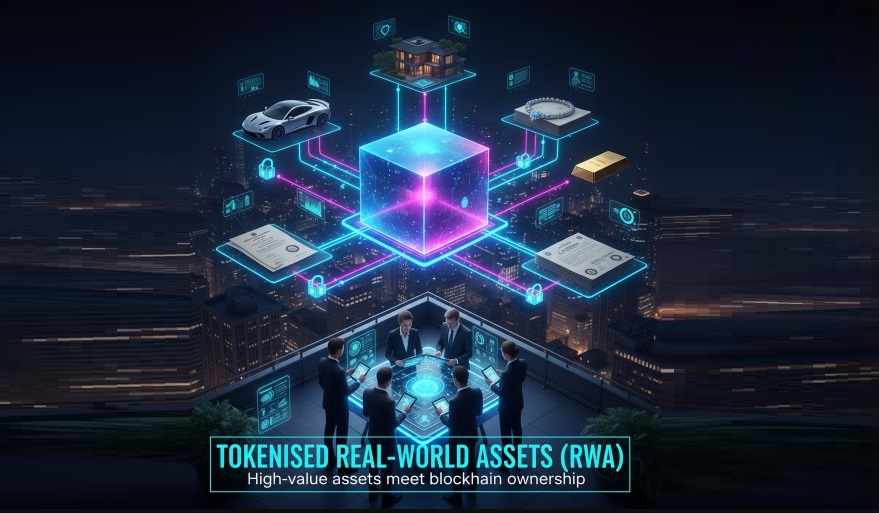
The next wave of blockchain adoption isn’t about digital collectibles or speculative tokens — it’s about bringing real-world assets (RWA) onto the blockchain.
From real estate and gold to corporate bonds and fine art, tokenisation is turning physical and financial assets into digital tokens that can be traded, owned, and managed securely on-chain.
By merging traditional finance (TradFi) with decentralized technology (DeFi), tokenised RWAs unlock liquidity, accessibility, and transparency — redefining ownership and investment for the digital age.
What Are Tokenised Real-World Assets (RWA)?
Tokenisation is the process of converting ownership rights of a physical or financial asset into a digital token recorded on a blockchain.
Each token represents a fractional share of the underlying asset, giving investors direct, verifiable exposure without intermediaries.
Examples include:
- 🏠 Real estate — tokenising property into tradeable digital shares.
- 🪙 Commodities — such as gold, silver, or oil reserves.
- 📑 Securities & bonds — tokenised debt instruments and corporate shares.
- 🎨 Art & collectibles — fractional ownership of high-value artworks.
- 💰 Private equity — startup or fund investments represented as blockchain tokens.
These digital representations can be traded, collateralized, or used within DeFi protocols, blurring the lines between traditional assets and crypto finance.
Why Tokenisation Matters
Traditional financial systems limit access, speed, and transparency. Tokenisation solves many of these long-standing inefficiencies:
| Challenge in Traditional Finance | Solution with Tokenisation |
|---|---|
| High entry barriers | Fractional ownership lets anyone invest small amounts. |
| Illiquid assets | Tokenised assets can be traded 24/7 on digital marketplaces. |
| Complex settlement processes | Blockchain offers near-instant, transparent settlement. |
| Intermediary dependence | Smart contracts automate trust and transactions. |
| Limited transparency | On-chain records ensure verifiable ownership and compliance. |
By bridging TradFi and DeFi, tokenised assets bring the efficiency of blockchain to regulated, real-world value.
How RWA Tokenisation Works
The process generally involves five core steps:
- Asset Selection & Valuation
- Identify a high-value asset (e.g., real estate, commodity, or debt).
- Conduct valuation, due diligence, and legal compliance.
- Legal Structuring
- A special-purpose vehicle (SPV) or trust holds the asset off-chain.
- Legal contracts ensure the token represents ownership or claim rights.
- Token Creation
- A digital token (ERC-20 or similar) is issued, representing a fractional share.
- Metadata links each token to legal documentation or asset proof.
- Distribution & Trading
- Tokens are offered to investors via regulated platforms or DEXs.
- Transfers occur transparently on blockchain.
- Management & Compliance
- Dividends, yields, or rents are distributed via smart contracts.
- Regulatory audits ensure ongoing compliance and investor protection.
This hybrid model combines the trust of regulation with the efficiency of decentralisation.
Real-World Examples of Tokenised RWAs
🏦 1. Tokenised Treasury Bills and Bonds
Institutions are issuing on-chain versions of government bonds to provide stable, yield-bearing assets for DeFi investors.
- Platforms like Ondo Finance and Backed Finance tokenize U.S. Treasuries, bringing traditional yield products into DeFi.
🏠 2. Real Estate Tokenisation
Projects like RealT and Propy enable fractional investment in physical properties.
Investors earn rental income directly through smart contracts.
💎 3. Commodities on Blockchain
Gold-backed tokens such as PAXG (Paxos Gold) and Tether Gold (XAUT) allow holders to own verified, redeemable gold.
🧑🎨 4. Tokenised Art & Collectibles
Platforms like Masterworks and Artfi fractionalize fine art, giving investors access to blue-chip artwork once limited to the elite.
💹 5. Private Credit and Debt Markets
Startups like Centrifuge and Maple Finance use blockchain to tokenize real-world debt, connecting borrowers with global liquidity providers.
These examples show how tokenisation isn’t theoretical — it’s already redefining global finance.
The Benefits of Tokenised Real-World Assets
| Benefit | Description |
|---|---|
| Liquidity | Unlocks liquidity in traditionally illiquid markets (real estate, private equity). |
| Accessibility | Fractional tokens lower entry barriers for retail investors. |
| Transparency | Blockchain ensures clear audit trails and ownership proof. |
| Efficiency | Automated transactions reduce friction, intermediaries, and costs. |
| Composability | Tokenised assets can integrate with DeFi for lending, staking, and yield. |
In essence, tokenisation democratises investment and enables a 24/7 global financial system.
Challenges and Risks
While promising, RWA tokenisation faces hurdles:
- Regulatory complexity: Varying jurisdictions treat tokenised assets differently.
- Custody and verification: Linking on-chain tokens with real assets demands robust legal and audit frameworks.
- Liquidity fragmentation: Early projects may face low trading volumes.
- Security risks: Smart contract vulnerabilities and bridge exploits remain threats.
- Adoption curve: Institutional participation and investor education are key.
The long-term success of RWA tokenisation depends on regulatory clarity, interoperability, and trust.
The Future of Tokenised Assets
By 2030, experts predict that $10–20 trillion in real-world assets could exist on-chain.
Key trends shaping this future include:
- Institutional Adoption: Banks, funds, and governments integrating tokenisation frameworks.
- DeFi-RWA Fusion: Tokenised assets used as collateral in DeFi protocols for stable, yield-bearing products.
- AI & Automation: Smart contracts dynamically rebalancing portfolios and managing compliance.
- Cross-Chain Interoperability: Tokenised assets moving fluidly across blockchains.
- Regulated Marketplaces: Emergence of licensed platforms bridging TradFi and DeFi seamlessly.
Tokenisation will not replace traditional finance — it will enhance and modernize it, making capital markets faster, fairer, and globally accessible.
✅ Conclusion
The tokenisation of real-world assets marks one of the most profound shifts in finance since the rise of the internet.
By embedding ownership, transparency, and liquidity into the blockchain, RWA tokenisation transforms how we invest, trade, and manage value.
From luxury real estate to treasury bonds, every asset can become programmable — unlocking global participation and efficiency once unimaginable in traditional systems.
The era of blockchain-backed real-world value is here — and it’s just the beginning.