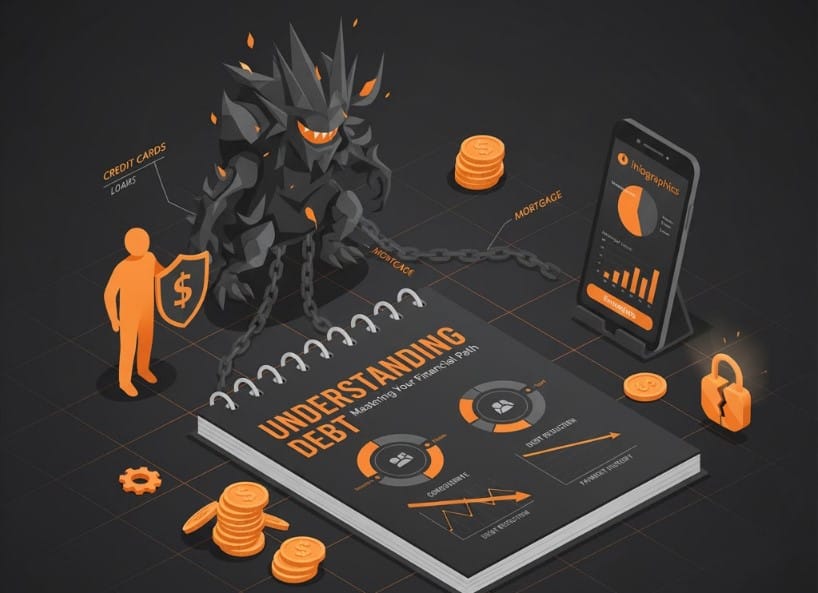
Debt can feel like an invisible weight — heavy, constant, and emotionally draining. Whether it’s credit card balances, student loans, or medical bills, being in debt often triggers feelings of shame, anxiety, or even helplessness.
But understanding how debt management works can transform that weight into a structured, achievable plan for financial freedom.
This article breaks down both the practical side of debt management and the psychological shifts that make the process sustainable.
1. What Is Debt Management?
At its core, debt management means creating a structured plan to repay what you owe — without sacrificing your basic needs or mental well-being.
It’s not about quick fixes or shortcuts. It’s about balance: paying down debt strategically, maintaining healthy credit, and avoiding new financial stress.
A strong debt management approach usually includes:
- Budgeting and expense tracking
- Prioritizing debts
- Negotiating lower interest rates
- Consolidating multiple debts into one manageable payment
- Building emotional resilience and long-term habits
When done correctly, debt management doesn’t just pay off bills — it rebuilds your confidence with money.
2. Why Debt Management Matters
Ignoring debt doesn’t make it disappear — it multiplies it. Interest accumulates, credit scores drop, and stress compounds.
But managing debt early creates:
✅ Clarity — you know exactly what you owe
✅ Structure — you follow a realistic repayment plan
✅ Confidence — you gain control over your financial story
Debt is not a moral failure; it’s often a result of circumstances — medical expenses, education costs, or economic hardship. Debt management gives you the tools to rewrite your financial narrative from survival to empowerment.
3. Step One: Assess Your Debt Honestly
Before you can manage debt, you have to face the full picture.
Create a debt inventory that includes:
- Creditor name
- Total balance
- Interest rate
- Minimum payment
- Payment due date
This list becomes your starting map.
Many people avoid this step because it feels overwhelming — but the truth is, you can’t fix what you can’t see. Awareness is the first act of financial courage.
4. Step Two: Build a Realistic Budget
A budget isn’t about restriction — it’s about direction.
Start by listing your monthly income and expenses. Then allocate funds toward debt repayment without cutting all your quality of life.
A sustainable budget includes:
- Essentials (rent, food, transport)
- Debt payments
- Emergency savings (even $25/month helps)
- Personal enjoyment (a small amount to avoid burnout)
Remember, consistency beats perfection. A rigid budget may collapse; a flexible one adapts and lasts.
5. Step Three: Choose a Debt Repayment Strategy
There are several proven methods to manage and reduce debt.
The Debt Snowball Method
- Pay off your smallest debts first to build momentum.
- Motivation grows as you eliminate balances one by one.
The Debt Avalanche Method
- Focus on debts with highest interest rates first.
- Saves the most money long-term, though progress may feel slower.
Debt Consolidation
- Combine multiple debts into one loan with a lower interest rate.
- Simplifies payments and reduces stress.
Credit Counseling or Debt Management Programs
- Certified agencies can negotiate with creditors on your behalf.
- They may reduce interest rates or waive certain fees.
Each strategy works — what matters most is choosing the one you can stick with consistently.
6. Step Four: Strengthen Your Emotional Relationship with Debt
Debt is as much emotional as it is financial.
Many people associate debt with guilt, failure, or fear. But that emotional weight makes decision-making harder and often leads to avoidance or impulsive spending.
To shift this, practice financial mindfulness:
- Detach shame from numbers. Debt doesn’t define your worth.
- Track progress visually. See your efforts grow over time.
- Celebrate small victories. Every payment is progress.
Money management is not just math — it’s self-awareness.
7. Step Five: Protect Yourself from Future Debt
Managing current debt is only half the equation; preventing new debt completes the cycle.
Here’s how to build protection:
- Create an emergency fund ($500–$1,000 minimum)
- Use credit intentionally, not emotionally
- Set clear financial goals before large purchases
- Review subscriptions and recurring charges regularly
- Continue tracking expenses even after you’re debt-free
These habits transform financial recovery into long-term stability.
8. The Role of Professional Help
Sometimes, managing debt alone can be overwhelming. Seeking professional help isn’t failure — it’s strategy.
Financial counselors, credit advisors, or certified planners can:
- Review your debt-to-income ratio
- Negotiate with lenders
- Provide structured repayment programs
- Offer emotional and educational support
Look for nonprofit credit counseling agencies that are accredited by organizations like the National Foundation for Credit Counseling (NFCC).
9. The Psychological Side of Debt Management
Research shows that financial stress activates the same neural patterns as physical pain. That’s why managing debt can feel emotionally exhausting.
To cope, practice these techniques:
- Mindful money breaks: Spend 10 minutes weekly reviewing your finances calmly.
- Reframe progress: “I paid $200 of debt” is better than “I still owe $3,000.”
- Reward milestones: Small celebrations reinforce consistency.
- Talk openly: Discussing money reduces shame and isolation.
Debt management is emotional healing disguised as financial strategy.
10. Looking Toward the Future
Once you begin to manage debt successfully, your focus shifts from survival to growth.
Debt management teaches discipline, patience, and financial literacy — the same skills that build wealth.
When you finally reach a zero balance, don’t stop there. Redirect those payments into:
- Emergency savings
- Investments
- Retirement contributions
- Experiences that enrich your life
Debt freedom isn’t just the absence of bills — it’s the presence of peace.
Conclusion
Understanding debt management means more than organizing payments — it’s about transforming your entire relationship with money.
It’s the balance of strategy and self-compassion, discipline and flexibility, numbers and emotions.
Every payment you make, every habit you build, and every time you choose awareness over avoidance — you move closer to freedom.
Remember:
- Debt is temporary.
- Knowledge is power.
- And financial freedom begins the moment you take control.