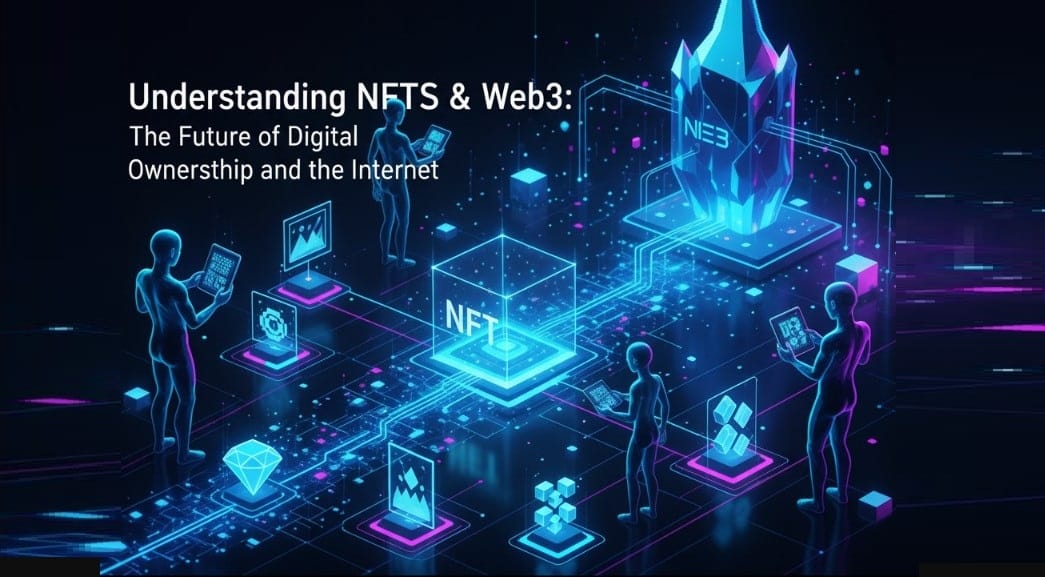
The digital world is evolving at a rapid pace. Concepts like NFTs (Non-Fungible Tokens) and Web3 are reshaping how we perceive ownership, creativity, and interaction online.
For businesses, creators, and investors, understanding these technologies is crucial for staying ahead in the digital economy.
1. What Are NFTs?
NFTs are unique digital assets stored on a blockchain. Unlike cryptocurrencies such as Bitcoin, which are interchangeable, NFTs represent one-of-a-kind items, including:
- Digital art and collectibles
- Music, videos, or media files
- Virtual real estate in metaverse platforms
- Intellectual property and gaming assets
NFTs prove ownership and authenticity. Blockchain technology ensures that each NFT is verifiable, immutable, and traceable.
2. How Web3 Changes the Internet
Web3 represents the next generation of the internet, moving from centralized platforms to a decentralized ecosystem where users control data, identity, and assets.
Key features of Web3:
- Decentralization: Data and applications run on blockchain networks, reducing reliance on tech giants.
- User ownership: Users control their digital identity and assets.
- Token economy: Value is exchanged through cryptocurrencies, NFTs, or other digital tokens.
- Smart contracts: Automated agreements that execute without intermediaries.
In Web3, the internet becomes a permissionless, community-driven space.
3. Why NFTs Are Important in Web3
NFTs are more than collectibles—they are foundational to digital ownership:
- Enable creators to monetize content directly
- Facilitate proof of ownership for virtual goods and intellectual property
- Encourage new forms of online collaboration and governance
- Provide investment opportunities in digital assets
NFTs make it possible to own, trade, and control unique digital items, creating a new economic layer online.
4. Real-World Applications of NFTs and Web3
- Digital Art & Entertainment: Artists sell unique works with smart contracts that provide royalties on resales.
- Gaming: In-game items, skins, and avatars can be owned, traded, or sold outside the game ecosystem.
- Virtual Real Estate: Platforms like Decentraland and Sandbox allow users to buy, sell, and monetize virtual land.
- Identity & Credentials: NFTs can represent certifications, memberships, or personal achievements.
- DeFi & Tokenized Assets: NFTs can be used as collateral, fractional ownership, or access tokens.
These applications show the versatility and transformative potential of blockchain technology.
5. Risks and Considerations
While promising, NFTs and Web3 carry risks:
- Market volatility: NFT prices can fluctuate dramatically.
- Security risks: Hacks, scams, and phishing attacks are common.
- Environmental concerns: Energy-intensive blockchain networks raise sustainability issues.
- Regulatory uncertainty: Governments are still defining NFT and crypto regulations.
Education, research, and caution are essential for anyone entering the space.
6. The Future of Digital Ownership
Web3 and NFTs are likely to reshape how we interact, trade, and value digital assets:
- Online communities may control their platforms rather than large corporations
- Digital scarcity can create genuine value for virtual goods
- Creators and users may earn fair compensation without intermediaries
- The economy may shift from ownership of physical assets to hybrid digital-physical ecosystems
The future internet is more participatory, decentralized, and asset-driven.
7. How to Get Started
- Learn blockchain basics: Understand Ethereum, Solana, and other networks powering NFTs.
- Explore NFT marketplaces: Platforms like OpenSea, Rarible, and Magic Eden are good starting points.
- Understand wallets and security: Use trusted wallets and secure your private keys.
- Start small: Consider low-cost NFTs or test digital interactions before large investments.
Education and experimentation are key to confident participation in Web3.
Conclusion
NFTs and Web3 are redefining digital ownership, creativity, and economic interaction online. By understanding their fundamentals, benefits, and risks, users can navigate this evolving landscape responsibly and strategically.
The internet is becoming not just a place to browse, but a space to own, create, and monetize digital assets—ushering in a new era of value and innovation.