Introduction
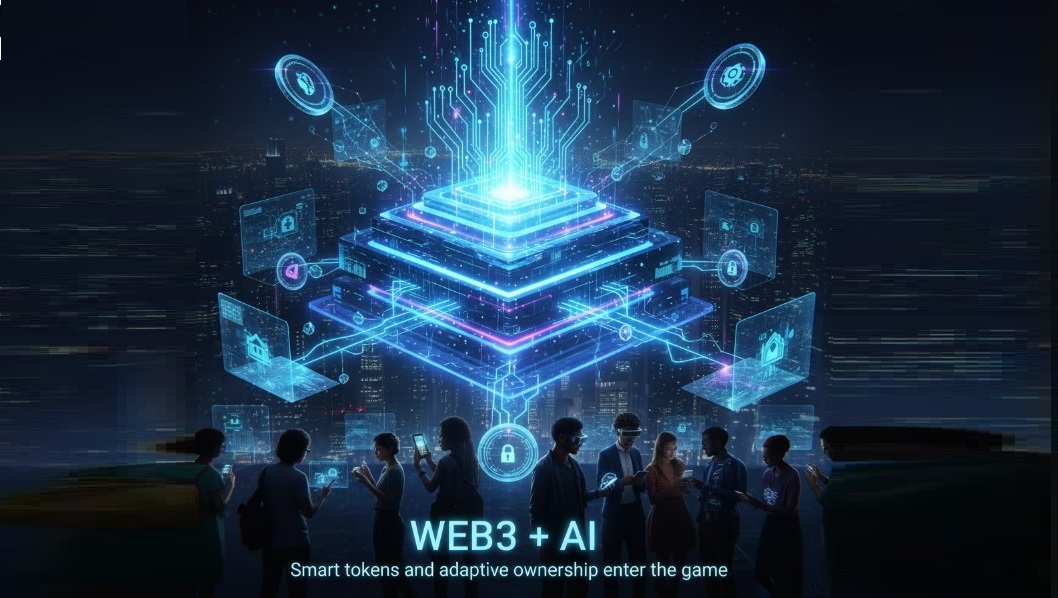
The next evolution of the internet is taking shape at the intersection of Web3 and artificial intelligence (AI). While Web3 decentralizes ownership through blockchain, AI brings intelligence, automation, and adaptability to digital assets and ecosystems.
Together, they’re giving rise to smart tokens — digital assets that can learn, evolve, and make decisions — and adaptive ownership models, where digital property dynamically responds to user behavior and real-world events.
This convergence is reshaping how we think about value, governance, and participation in the digital economy.
The Convergence of Web3 and AI
Web3 introduced trustless, transparent systems through decentralized ledgers and smart contracts. AI adds autonomy and intelligence, enabling systems to reason, predict, and act.
Combined, they create digital environments that are:
- Self-learning: Assets and platforms evolve through data and feedback.
- Personalized: Ownership rights and interactions adjust to user intent.
- Autonomous: Smart contracts become adaptive agents that execute and optimize actions on-chain.
This synergy marks the emergence of intelligent decentralization — where the blockchain no longer just records data but interprets and acts on it.
What Are Smart Tokens?
Smart tokens are programmable digital assets that can:
- React to real-time data inputs (e.g., market changes, user activity).
- Adjust their value, utility, or ownership dynamically.
- Interact autonomously with other on-chain contracts or AI agents.
Unlike static tokens, smart tokens “think” and “act” based on predefined logic or AI-generated insights.
For example:
- A token might increase rewards for holders who contribute to community governance.
- An AI-powered NFT could evolve visually or functionally as its owner engages more.
- A DeFi token could rebalance portfolios autonomously based on market analytics.
This transforms tokens from static collectibles into living, data-driven digital organisms.
Adaptive Ownership: The Next Layer of Digital Value
Traditional ownership is binary — you either own something or you don’t.
Adaptive ownership changes this by linking ownership rights to context, contribution, and usage.
Examples include:
- Dynamic royalties: Artists earn variable royalties based on secondary market activity or fan engagement.
- AI-adjusted staking: Token rewards adapt to user participation levels.
- Collaborative NFTs: Co-owned digital assets redistribute value based on ongoing contributions.
In this model, ownership becomes fluid, responsive, and participatory, driven by both blockchain transparency and AI intelligence.
Real-World Use Cases
🎨 1. AI-Powered NFTs and Digital Art
NFTs can now incorporate AI models that generate new art, respond to audience sentiment, or evolve visually.
- Projects like Botto and Alethea AI use machine learning to create autonomous artists whose tokens reflect ongoing creativity and user input.
💰 2. Smart DeFi Protocols
AI enhances DeFi platforms by dynamically optimizing yield strategies, managing liquidity pools, and mitigating risk.
- Smart tokens can auto-adjust interest rates or rebalance portfolios based on real-time market signals.
🧠 3. Decentralized Autonomous AI Agents (DAAIs)
These are self-operating entities that combine smart contracts with AI reasoning.
- DAAs can trade assets, manage data, or negotiate contracts autonomously, powered by blockchain transparency.
- Governance tokens may allow humans to guide AI policies democratically.
🌐 4. Web3 Identity and Reputation Systems
AI helps evaluate trustworthiness while NFTs or tokens act as verifiable digital IDs.
- Adaptive ownership ensures users maintain control over how their identity or data is shared across decentralized networks.
Benefits of Web3 + AI Integration
| Benefit | Description |
|---|---|
| Automation | Smart contracts gain AI-driven adaptability. |
| Efficiency | Autonomous agents reduce human overhead. |
| Transparency | Blockchain ensures traceable, auditable AI actions. |
| Personalization | Assets evolve based on user behavior and preferences. |
| Innovation | Enables entirely new financial, creative, and governance models. |
This integration empowers creators, investors, and developers to build self-evolving ecosystems.
Challenges and Considerations
- Ethical AI Use: Bias and opacity in AI decisions must be addressed.
- Data Privacy: Combining AI with blockchain requires careful management of on-chain and off-chain data.
- Regulatory Uncertainty: Emerging laws (like the EU AI Act) demand explainability and compliance.
- Energy and Scalability: Intelligent smart contracts require more computation and sustainability planning.
Responsible governance and explainable AI frameworks will be crucial for long-term trust.
The Future of Smart Tokens and Adaptive Ownership
By 2030, we’ll likely see:
- Autonomous economies: Entire digital ecosystems run by AI agents trading and collaborating.
- Dynamic DAOs: Governance structures that evolve based on participation and data-driven insights.
- AI-owned assets: Digital agents holding, using, and transferring tokens independently.
- Hybrid finance (AI + DeFi): Real-time, self-optimizing systems managing liquidity and investment portfolios.
Web3 and AI together form the foundation for a self-governing digital economy — where code doesn’t just execute rules, it learns and evolves.
✅ Conclusion
As AI and Web3 merge, the concept of ownership is being rewritten.
Smart tokens make digital assets interactive, intelligent, and autonomous, while adaptive ownership ensures value distribution aligns with user participation and context.
This new frontier represents a fundamental shift: from static blockchain records to living digital ecosystems where intelligence, transparency, and decentralization coexist.
The era of AI-powered Web3 isn’t about replacing humans — it’s about empowering them with smarter, fairer, and more adaptive digital ownership models.