Introduction
The internet has evolved in stages: from Web1 (static websites) to Web2 (interactive platforms dominated by centralized tech giants). Now, Web3 is emerging as the next evolution—a decentralized internet that promises greater control, privacy, and ownership for users.
But what exactly is Web3, and how will it change the way we interact online? This article breaks it down for creators, businesses, and everyday users looking to prepare for 2025 and beyond.
1. What Is Web3?
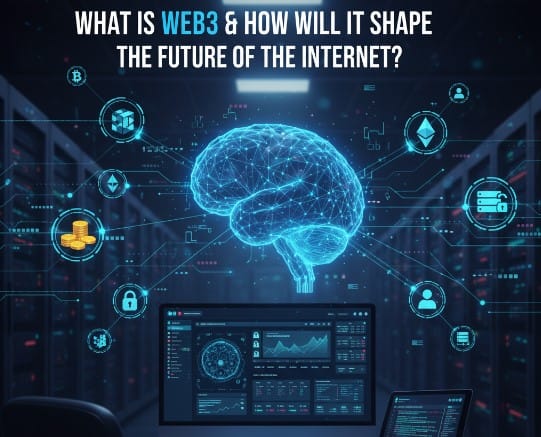
Web3 refers to a decentralized internet built on blockchain technology, where data and applications are distributed rather than controlled by a few corporations.
Key Features:
- Decentralization: No single entity controls the network.
- Ownership: Users own their data, assets, and digital identities.
- Tokenization: Cryptocurrencies and tokens enable new economic models.
- Trustless Interactions: Smart contracts allow automated agreements without intermediaries.
Example:
- Instead of Facebook controlling your social data, Web3 apps could allow you to own your content and earn rewards directly for your engagement.
Actionable Tip:
- Explore beginner-friendly Web3 platforms like Ethereum, Polygon, and Solana, or decentralized apps (dApps) to understand the ecosystem firsthand.
2. How Web3 Works
Web3 relies on blockchain technology and smart contracts to create decentralized applications.
Step-by-Step Example:
- Decentralized Apps (dApps): Run on blockchain networks instead of centralized servers.
- Smart Contracts: Automatically enforce rules without intermediaries.
- Tokens & NFTs: Enable digital ownership, governance, and incentives.
- Decentralized Storage: Platforms like IPFS store files across multiple nodes for security and redundancy.
Actionable Tip:
- Start by creating a digital wallet (MetaMask, Phantom) to interact with Web3 platforms securely.
3. Benefits of Web3
Web3 promises to redefine online experiences and digital economies:
- Data Ownership and Privacy: Users control their personal information.
- New Business Models: Creators can monetize content via tokens and NFTs.
- Decentralized Finance (DeFi): Offers financial services without traditional banks.
- Censorship Resistance: No single authority can remove or control content.
Example:
- A musician can release a song as an NFT, sell it directly to fans, and receive royalties automatically via smart contracts.
4. Challenges and Considerations
While Web3 is promising, there are hurdles to adoption:
- Scalability: Blockchain networks can face speed and cost issues.
- User Experience: Wallets, keys, and transactions can be complex for beginners.
- Regulatory Uncertainty: Governments are still defining rules for decentralized networks.
- Security Risks: Smart contracts can have bugs or vulnerabilities.
Actionable Tip:
- Experiment with small amounts of crypto and NFTs on Web3 platforms to gain hands-on experience without overexposing your assets.
5. How Web3 Will Affect Businesses and the Internet
Web3 has the potential to reshape online interaction, marketing, and commerce:
- Digital Identity: Businesses can verify users without storing sensitive data.
- Tokenized Incentives: Reward customers and employees with digital tokens.
- New Marketing Models: NFTs, metaverse experiences, and decentralized communities offer fresh engagement opportunities.
- Financial Services: DeFi could reduce reliance on banks, allowing peer-to-peer lending and investments.
Example:
- A brand could release limited-edition NFT collectibles that double as access passes for events, creating both engagement and revenue streams.
Conclusion
Web3 represents a paradigm shift in how the internet operates, emphasizing decentralization, user ownership, and new economic models. While adoption is still in early stages, understanding and exploring Web3 today prepares businesses and individuals for the decentralized future of 2025 and beyond.
🔑 Interactive Question:
If you could own and control your data online fully, what would you do differently compared to today?
CTA:
Start exploring Web3 today—set up a wallet, interact with a dApp, or mint your first NFT to experience the decentralized internet firsthand.