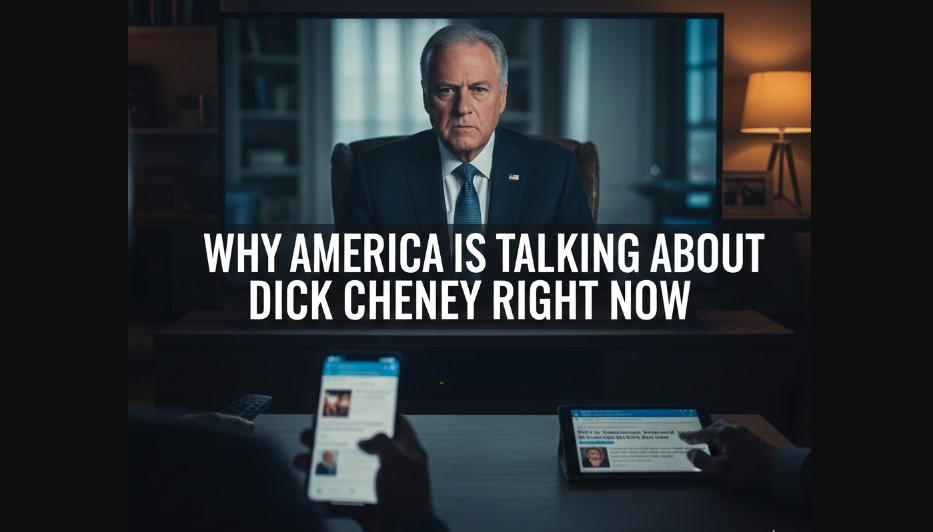
On November 3, 2025, former Vice President Dick Cheney passed away at the age of 84, and his death has sparked a wave of national reflection, debate, and tribute. Al Jazeera+2Los Angeles Times+2
Here’s a closer look at why Cheney is suddenly everywhere in the news — and what his legacy means today.
A Life of Power and Influence
Richard “Dick” Cheney wasn’t just any vice president — he was a defining force in modern American politics. During his public career, he held major roles at different levels of government:
- White House Chief of Staff under President Gerald Ford Wikipedia+1
- U.S. Congressman from Wyoming mint
- Secretary of Defense under George H.W. Bush during the Gulf War mint
- Vice President under George W. Bush from 2001 to 2009, where he became one of the most powerful VPs in U.S. history. TIME
The Cause of Death and Personal Struggles
Cheney’s health was fragile in later years. His family confirmed that he died from complications of pneumonia and cardiac/vascular disease. People.com+1 He had battled serious heart issues for decades, including five heart attacks in his life, and even underwent a heart transplant in 2012. People.com
A Polarizing Legacy: War, Power & Controversy
Cheney’s political legacy is deeply mixed — and that’s a big reason why so many Americans are talking about him, now more than ever.
- He was a central strategist of the “War on Terror” after 9/11, and a strong advocate for military interventions in Afghanistan and Iraq. The Guardian+2Newsweek+2
- He defended controversial policies like enhanced interrogation (often criticized as torture) and increased surveillance. The Guardian+1
- Many on the left have long criticized him for what they see as unchecked executive power. The Guardian
- At the same time, toward the end of his life, Cheney broke with parts of his own party — especially Donald Trump. Newsweek
National Reactions & Tributes
Following Cheney’s death, tributes poured in from across the political spectrum — but they weren’t all based on praise. The Guardian+1
- George W. Bush, who served with him, delivered a heartfelt eulogy, calling Cheney a “solid, reliable … rare” figure in American politics. TIME
- Liz Cheney, his daughter, also spoke publicly at his funeral, sharing personal memories and lessons she learned from him. Politico
- Critics, however, did not hold back: some called him a symbol of the “neoconservative establishment,” while others debated his role in wartime policies and civilian suffering. The Guardian
- Comedian Bill Maher sparked controversy with a joke about Cheney’s death, highlighting how even in mourning, Cheney remains a polarizing figure. New York Post
Why His Death Resonates Now
Dick Cheney’s passing is not just the end of a public life — for many Americans, it marks the closing of a chapter in U.S. political history:
- Reflection on 9/11 and the Iraq War: Cheney’s role in shaping America’s post-9/11 policies brings up old debates about war, national security, and civil liberties.
- The power of the vice presidency: He transformed the VP’s role into something far more influential than many before him.
- Legacy of division: Cheney was both respected and reviled; his death brings fresh attention to the ideological divides he embodied.
- Generational shift: With his passing, newer generations may reassess past decisions — and what they mean for the country’s future.
Conclusion: Why “Dick Cheney” Is Trending — and What It Really Means
Dick Cheney’s death is making headlines because he wasn’t just a historical figure — he was a central architect of some of America’s most consequential policies in the 21st century. His legacy is complicated: praised for his resolve and criticized for his aggressive methods.
Today, as America remembers him, the conversation isn’t just about the man — it’s also about the values, decisions, and power structures he shaped and left behind.