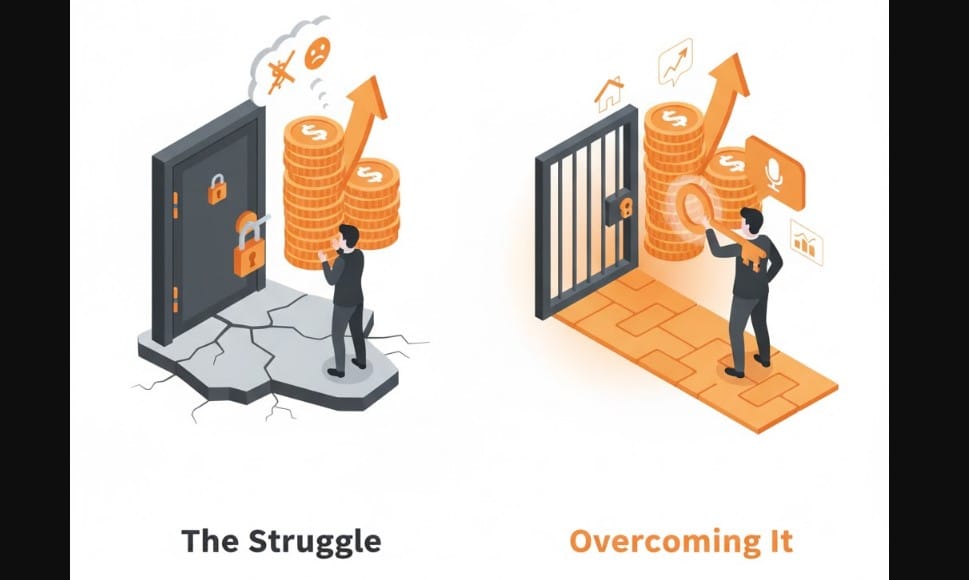
You work hard, contribute consistently, and know you deserve more — yet when it comes time to ask for a raise, something holds you back.
Your hands sweat, your voice shakes, or you talk yourself out of it entirely.
The struggle to ask for a raise isn’t just about money — it’s about self-worth.
Most people think salary negotiations are about skill or timing.
In reality, they’re deeply emotional — shaped by beliefs, fears, and past experiences around value and validation.
1. The Emotional Root of the Fear
The fear of asking for a raise often hides behind rational excuses like:
- “Now isn’t the right time.”
- “They’ll say no.”
- “I should just be grateful for what I have.”
But beneath those reasons is a deeper emotion: fear of rejection or unworthiness.
From a young age, many of us are conditioned to seek approval — from parents, teachers, and later, employers.
So when we ask for more money, it can subconsciously feel like we’re asking for permission to be valued.
That emotional vulnerability makes silence safer than self-advocacy.
2. The Self-Worth–Money Connection
Money is more than currency — it’s a mirror of how we value ourselves.
If you struggle with self-worth, asking for more can trigger thoughts like:
- “Who am I to ask for that much?”
- “What if they find out I’m not good enough?”
- “I don’t deserve more until I’ve proven myself.”
These are limiting money beliefs, and they quietly shape your career trajectory.
Reframing this starts with a new truth:
Asking for a raise isn’t greed — it’s self-respect.
You’re not demanding; you’re aligning compensation with contribution.
3. The Cultural and Social Layer
In many cultures, modesty is praised — especially around money.
We’re taught not to brag, not to be pushy, and to “be thankful” for what we have.
While humility is healthy, it becomes harmful when it stops you from advocating for fair pay.
Women, in particular, are often socialized to avoid confrontation or prioritize harmony over assertion.
This cultural conditioning can lead to chronic under-earning — not from lack of skill, but from internalized self-restraint.
Recognizing these patterns helps you separate your authentic values from learned behaviors that hold you back.
4. The Confidence Gap vs. Competence Gap
Here’s a truth that might surprise you:
Most people who hesitate to ask for a raise are already overqualified.
It’s not a competence issue — it’s a confidence issue.
According to behavioral studies, men tend to ask for raises more often and earlier, while women and high-empathy individuals often wait until they feel 100% “ready.”
But the workplace rarely rewards silent excellence.
It rewards visible value.
Your job isn’t just to work hard — it’s to communicate your impact clearly.
5. Emotional Triggers That Hold You Back
Here are common subconscious triggers around money and authority:
| Trigger | Underlying Fear | Result |
|---|---|---|
| Fear of Rejection | “What if they say no?” | Avoid asking altogether. |
| Fear of Conflict | “I don’t want to seem difficult.” | Stay quiet and resentful. |
| Fear of Judgment | “They’ll think I’m greedy.” | Downplay your achievements. |
| Imposter Syndrome | “I’m not good enough yet.” | Keep overworking for less. |
Awareness is power — once you name your fears, they lose control over you.
6. Reframing the Ask: From Begging to Partnering
The key shift is to stop seeing a raise request as a favor and start seeing it as a value conversation.
You’re not begging for more — you’re proposing a fair exchange.
Frame it around impact:
- How your work has driven measurable results
- How your role has evolved
- How your contribution aligns with company goals
When you communicate from confidence, not need, you shift the emotional energy of the conversation.
7. Emotional Preparation Before the Ask
Here’s how to align emotionally before you schedule that meeting:
- Write down your wins — remind yourself of your concrete value.
- Visualize success — picture the conversation going well.
- Detach from the outcome — focus on clarity, not control.
- Practice with empathy — see the discussion from your employer’s perspective.
You’ll feel calmer and more in control — because your mindset will lead, not your fear.
8. Building a New Money Belief System
To consistently advocate for yourself, reprogram your money beliefs:
| Old Belief | New Empowering Belief |
|---|---|
| “I should be grateful for what I have.” | “I can be grateful and still ask for what I deserve.” |
| “Asking for more is selfish.” | “Fair pay honors my work and supports my growth.” |
| “I’ll wait until they notice me.” | “It’s my job to communicate my value clearly.” |
The more you repeat these affirmations, the more natural self-advocacy becomes.
Conclusion
The reason you struggle to ask for a raise isn’t weakness — it’s conditioning.
You’ve been taught to equate money with approval, worth, or conflict.
But you can rewrite that story.
Asking for a raise isn’t an act of greed — it’s an act of self-trust.
When you know your worth emotionally, you stop fearing rejection and start creating alignment.
And that’s the moment your external wealth begins to match your internal value.